
Systems | Development | Analytics | API | Testing

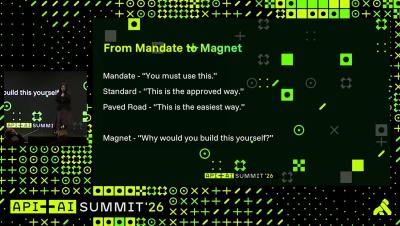
Platform Engineering: Why Great Architecture Doesn't Win Developers

Akshi, Senior Engineering Manager at Pandora, explains why platform engineering succeeds only when reliable API infrastructure is paired with developer experience, trust, and intelligent governance. For platform leaders, API architects, and engineering teams building API and AI platforms, this talk turns adoption into a measurable product problem: reduce friction, create paved roads, and design guardrails that help both humans and AI agents move safely.
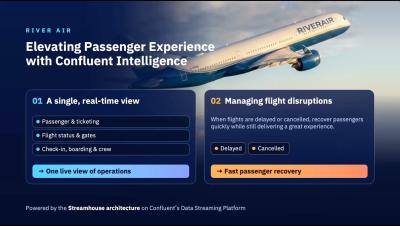
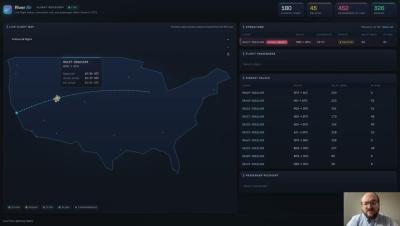
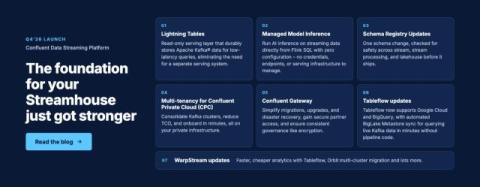
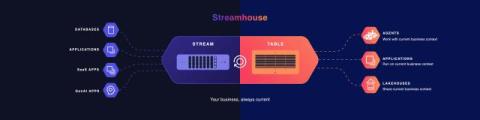
Demo: Streamhouse for AI and Analytics with Confluent's Data Streaming Platform

See how an airline company can use Confluent to build a Streamhouse that powers a real-time flight operations dashboard and AI agents to rebook passengers using current flight and hotel data. Explore Lightning Tables, Confluent Intelligence (Streaming Agents), and Tableflow.

Demo: Lightning Tables on Confluent Cloud

See how Lightning Tables in Confluent Cloud serves the current state of of the business as a fully managed read-only layer—so AI agents and applications can query fresh context at low latency and high concurrency, without ETL, separate databases, or caches. The demo shows how to enable Lightning Tables on Kafka topics for instant querying.

Streamhouse: The data architecture for the AI era

AI is changing what businesses need from their data. Applications and AI agents need access to current, governed business context as events unfold, not after another refresh cycle. Enter the Streamhouse: an architectural approach designed to continuously capture and govern live data, keeping business context current across applications, analytics and AI. Built on three core principles—always current, mission-critical and decentralized—a Streamhouse provides the foundation for making real-time data usable across the enterprise.

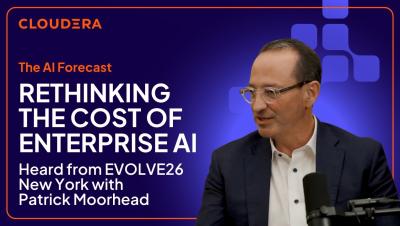
Ep 99 | Rethinking the Cost of Enterprise AI | Heard from EVOLVE26 New York

A $6,000 laptop could change the math on a $60,000 AI token bill. That fact makes Patrick Moorhead question how businesses calculate the cost of AI. For suitable workloads, running an open model locally could make an expensive-looking hardware purchase a worthwhile investment. His focus is the cost of producing a reliable result.

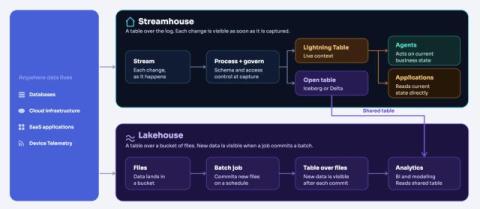
A Tale of Two Houses: A Comparison Between Streamhouse and Lakehouse

Most modern organizations run their business across two estates. The operational estate handles a business's day-to-day needs: databases, microservices, real-time applications, and event streams like Kafka. The analytical estate runs complex, large-scale aggregations across historical data, typically stored in a data warehouse or lakehouse.

Your Business, Always Current. Streamhouse - The Data Architecture for the Age of AI.

Our own Jay Kreps argued that every company is becoming software. He was right. Businesses no longer simply use software to help people do their jobs. Software has become the way the business actually runs. AI is now doing to software what software did to the business. At first, generative AI helped us do our jobs faster and better. It has since moved from drafting and summarizing to writing code and carrying out complex tasks.

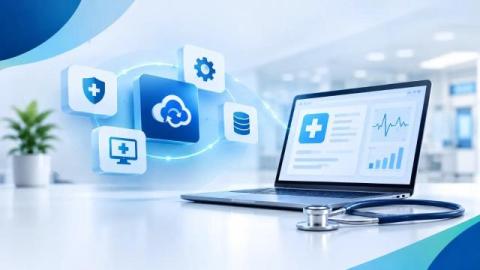
Top Healthcare Software Modernization Companies to Know in 2026

‍ Healthcare software modernization involves upgrading legacy clinical applications, infrastructure, and data systems to improve interoperability, security, and operational efficiency. It enables healthcare organizations to adopt cloud-native architectures, automate workflows, and support evolving digital healthcare requirements. Selecting the right healthcare application modernization service providers is critical for hospitals, health plans, and digital health companies.

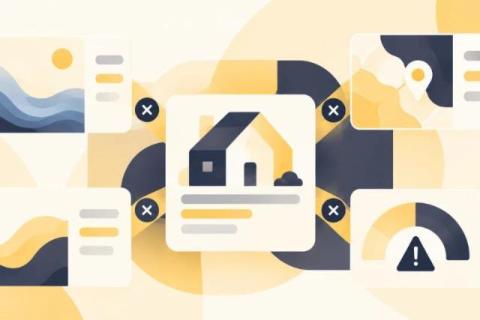
Building Property Risk Intelligence When Data Sources Disagree

Property risk intelligence is the property-level risk assessment a platform derives by reconciling observations from multiple third-party providers. It is more than a set of provider scores shown side by side. The challenge begins when those sources describe the same property differently. One may report a modeled flood probability, another a regulatory flood-zone designation, and another a physical characteristic that affects exposure.