For too long, businesses have been adrift in a sea of static dashboards and colorful visualizations, mistaking activity for insight. They call it business intelligence, but in reality, it's just more noise. These legacy dashboards are inherently unintelligent; they might answer your first question, but they immediately force you to create ten more dashboards to get subsequent answers. It’s a vicious cycle of dashboard sprawl, not true intelligence.
Data is everywhere, but transforming it into clear, actionable insights is easier said than done. For organizations using Qlik, the platform offers a strong foundation for analysis, but how do you take your dashboards from functional to exceptional? Enter Vizlib from insightsoftware, the game-changing Qlik add-on that empowers users to turn basic dashboards into engaging data stories.
By Erez Schnaider, Technical Product Marketing Manager, ClearML The promise of artificial intelligence, particularly with the advent of LLMs, is transformative. Organizations are eager to harness this power, integrate AI into their products, and automate complex processes in order to materialize the lofty promises of generative AI – efficiency, deep domain knowledge, and a competitive edge.
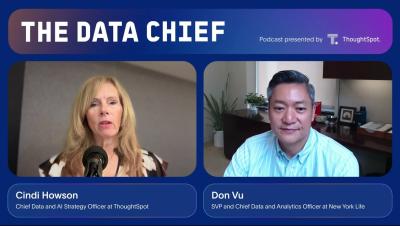
Step inside the world of data innovation as Cindi Howson talks with Don Vu, SVP and Chief Data and Analytics Officer at New York Life. They'll reveal how a 180-year-old institution is leveraging cutting-edge AI to make experiences proactive and intelligent. Hear how New York Life utilizes their innovative "GuideMe" tool to supercharge agent and client financial planning, tackles the "last mile problem" in data operationalization, and ensures data quality is paramount for both structured and unstructured data.
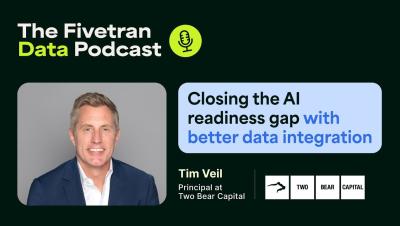
In this episode, Fivetran speaks with Tim Veil, Principal at Two Bear Capital, to unpack the challenges businesses face in operationalizing AI — and why data strategy, not just data volume, is the key to unlocking real business value.
Today, identifying, managing and understanding data is made faster and easier through the use of automation, algorithms and natural language capabilities that enhance – not replace – the key steps along the analytics life cycle. Most importantly, it isn’t as inaccessible as you may think.
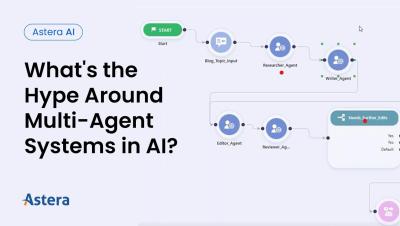
AI is evolving fast. But if we want it to truly solve real-world problems, we need to stop thinking of it as a single brain and start building it like a team. That’s where Multi-Agent Systems come in. Instead of relying on one large model to do everything, we’re now designing AI agents with specialized roles that collaborate, delegate, and execute tasks together, just like high-performing human teams.