Digital Transformation At Warp Speed
How Hitachi Vantara’s global IT team is enabling the “new normal” and delivering at speeds previously thought impossible.
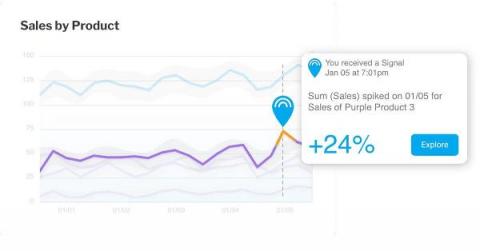
One of the really big trends that we're seeing in the analytics space, is the move towards talking about the analytics experience. Analytics experience is about supporting or triggering decisions and transactions. This is a shift from what I would describe as the passive use of analytics, where people were expected to use dashboards and reports that didn't add a lot of value to their transactions or decision making. The difference sounds subtle, but it's really quite profound.
The Fourth Industrial Revolution has not halted despite the global pandemic. If anything, COVID-19 has only accelerated the adoption of Industry 4.0, leading businesses across industries to use Internet of Things (IoT) technology and Big Data in a more sophisticated manner.
As we covered in part 1 of this blog series, Snowflake’s platform is architecturally different from almost every traditional database system and cloud data warehouse. Snowflake has completely separate compute and storage, and both tiers of the platform are near instantly elastic. The need to do advanced resource planning, agonize over workload schedules, and prevent new workloads on the system due to the fear of disk and CPU limitations just go away with Snowflake.
Today SEO is much more than just finding high converting keywords for better ranking. Most marketers and content writers nowadays rely on different strategies to stay in the game. Imagine handling such intricate tasks manually or shuffling through several tools daily to get this done. Sounds hectic, right? But what if we told you, there’s a single package out there to make your work easier.
Let’s precisely define the different kinds of data repositories to understand which ones meet your business needs. October 29, 2020 A data repository serves as a centralized location to combine data from a variety of sources and provides users with a platform to perform analytical tasks. There are several kinds of data repositories, each with distinct characteristics and intended use cases. Let’s discuss the peculiarities and uses of data warehouses, data marts and data lakes.