Systems | Development | Analytics | API | Testing

Run Slurm Workloads Inside Kubernetes With ClearML

By Erez Schnaider, Technical Product Marketing Manager, ClearML Slurm has powered HPC environments for years. It is battle tested, widely adopted, and deeply embedded in research and engineering workflows. Over 60% of the TOP500 supercomputers use it to manage their large infrastructure, orchestrate workloads and schedule jobs, as it is powerful and versatile with over 20 years of engineering behind it.

Kamal 2: Deploying multiple apps

Deploying more than one web application on a single server used to require a lot of infrastructure fiddling. Docker made this better, but some things that are new in Kamal 2 make deploying containerized applications even easier. Kamal is a deployment tool from Basecamp that leans on Docker and its own integrated proxy to simplify deploying web apps. Kamal 2 makes deploying more than one Rails app to the same server easier.

Building a First-Class Kubernetes Experience in Kong Konnect

This is the second post in a series about reasons to attend API Summit 2025. Check out the previous post here. To unlock Kubernetes’ full potential, many enterprises are relying on three key building blocks available in Kong Konnect today: Together, these components extend Kubernetes from being just a container orchestration platform. They lay the foundation for Kubernetes to support the exposure, governance, and operation of APIs — and the AI workflows that increasingly rely on those APIs.

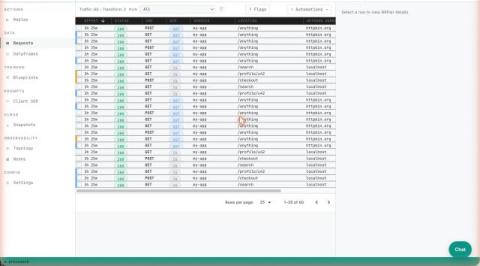
Mastering Kubernetes Testing with Traffic Replay

Kubernetes has become the backbone of many modern application deployment pipelines, and for good reason as a container orchestration platform, Kubernetes automates the scaling, deployment, and management of workloads, allowing developers to make their applications easier to manage and deploy at scale without worrying about their service’s dependencies, their user’s operating system, or the intricacies of their data center or infrastructure provider.

WSO2 Kubernetes Gateway + Moesif API Analytics: Drive API Performance and Adoption

WSO2 Kubernetes Gateway provides a robust, Kubernetes-native platform for managing APIs. It’s purpose-built for cloud-native teams requiring fine-grained control over APIs in modern, distributed environments. With support for microservices architecture, secure ingress, and service discovery, Kubernetes Gateway solves the infrastructure side of the API equation.

Top 10 Docker Alternatives in 2025

If you are searching for Docker alternatives, chances are you are looking for better performance, more security, or freedom from licensing restrictions. Whether you are looking for an alternative to Docker Desktop, a lightweight runtime, or advanced container orchestration, this guide will help you find the best Docker alternatives available today. Here is everything you need to know about the top 10 tools that serve as powerful Docker competitors.

Laravel Docker containers for development and production

In recent years, both Docker and Laravel have exploded in popularity. In this step-by-step tutorial, we will dive into how to dockerize an existing Laravel app to run it locally. Then, we'll make it ready to run in a production environment, like for a web server. We will also deploy it to Google Cloud Run without getting into Kubernetes or any YAML configs, taking advantage of our Laravel Docker container. Let’s dig in!

What does OOMKilled mean and how do I prevent it?

When creating production-level applications, enterprises want to ensure the high availability of services. This often results in a lengthy development process that requires extensive testing for the applications or a new release. This involves testing the behavior of the application under load, measuring the performance metrics, and accounting for the resource consumption. All this is done to ensure that the application does not behave unexpectedly when being used by clients.