Systems | Development | Analytics | API | Testing

How to design & test APIs with OpenAPI & Swagger | What's changed in 3.1 & 3.2

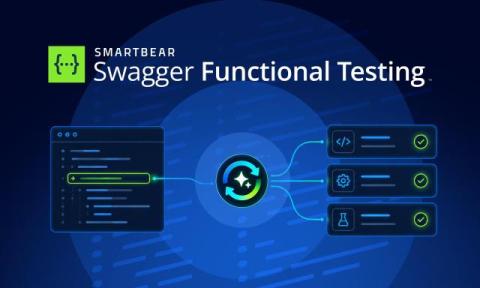
Outdated API docs and last-minute bugs cost teams time and trust. Learn how the OpenAPI Specification help you document, govern, and test your APIs from design to deployment – all inside SmartBear Swagger. SmartBear's Yousaf Nabi, Developer Advocate, and Chris Armstrong, Manager of Developer Relations, explain why API documentation drifts out of sync and walk through what's changed between OpenAPI 3.0, 3.1, and 3.2. After covering a brief history of Swagger and the OpenAPI specification, they demo the full API workflow across Swagger.

Enterprise test management: Should you build or buy in the age of AI?

AI has opened the door for teams to build tools they previously had to buy. With the right prompts and internal workflows, teams can generate test cases, summarize results, analyze defects, and automate parts of the testing process faster than ever. For enterprise QA and engineering leaders, that raises a practical question: “should we build our own test management layer, or adopt an AI-powered test management platform?” It’s a fair conversation to have.

Ship production-ready APIs faster and confidently with SmartBear ReadyAPI | Demo Den

API testing gets harder as it grows: fragmented tools, brittle scripts, thousands of endpoints, and external dependencies that block progress. SmartBear ReadyAPI lets teams ship production-ready APIs faster by validating functionality, performance, and security in one test, with virtualization built in – no separate tools to juggle. In this Demo Den, Thomas Hurley, senior manager of product management at SmartBear, shows how one test does the work of three, so teams cut maintenance time and stop waiting on external dependencies.

AI tip #2: Improve pull requests with AI

AI tip: For pull requests, let your AI agent take the first pass before your team ever sees it. That's the workflow Ilia Mogilevsky, Software Engineering Manager at SmartBear, built. By packaging prompts into a skill loaded with Git history, Jira context, and CI checks, he turned a basic AI assistant into a reviewer he trusts. The skill then generates a structured report with approval-ready fixes. Accept the changes, adjust what's off, and push – review cycles shrink and deploys move faster.

SmartBear Swagger: Meeting You Where You Work

Some approaches to API governance interrupt developers mid-flow, forcing them to context-switch into a separate tool and manually verify their API definition before they can ship. That approach has never really worked. Not because developers don’t care about quality, they do, but because the best time to fix an API is the moment you’re already thinking about it. That’s what has always guided how Swagger grows. Not “come to us.” But “we’ll be there.”

AI Coding Tools and API Governance: Here's Why You Need Both.

GitHub Copilot, Claude, and Cursor have become genuine superpowers for API development. They draft OpenAPI definitions, generate endpoints, propose schema changes, and write test cases — all from inside the IDE, in real time. Teams using these tools are generating API definitions faster than most thought possible even a few years ago. That velocity is real, and it’s reshaping how engineering teams think about their toolchain.

Build resilient end-to-end tests with AI agents in SmartBear Reflect | Demo Den

See how SmartBear Reflect uses agentic AI to build end-to-end tests in minutes and keep them resilient as your application changes. In under 20 minutes, Reflect co-creator, and SmartBear Director of Product Management, Todd McNeil walks through live test creation across web and mobile, with zero fluff.

Mobile testing, reimagined: How Reflect's Mobile Testing Changes QA

Mobile application users expect flawless experiences on every device, every OS version, and every screen size, and they have little patience for anything less. Yet for QA teams, achieving that level of coverage traditionally means wrestling with brittle automation scripts, complex Appium setups, and endless device fragmentation. Even after all this manual effort, your mobile app quality could contain unseen gaps.

Four signs your automation suite is costing you more than it's saving

An automation suite that’s losing ground rarely makes it obvious. Coverage numbers look reasonable. Tests are running. The CI pipeline is green more often than not. Meanwhile, the team is quietly working around what isn’t working – rerunning tests until they pass, deferring maintenance, or accepting a regression window that’s wider than it should be. Those workarounds can feel normal. They aren’t.