Systems | Development | Analytics | API | Testing

At an ERP Crossroads? Let insightsoftware Guide Your Path.

Over the past several years, many organizations have shifted their technology focus to the cloud. From a technical perspective, that has required a delicate balancing act, managing tradeoffs between the old and the new. Business leaders have sought to minimize the level of disruption their teams face while modernizing business applications, increasing integration, and adding important new functionality.

5 Factors to Assess When Choosing an E-Commerce ERP

The five factors to consider when choosing an e-commerce ERP are: Choosing the right e-commerce platform, like Shopify or Magento, is just the first step in the selection process when planning your IT environment. Your e-commerce business can also benefit from ERP (enterprise resource planning) software that helps you streamline, automate, and optimize your business workflow.

5 Reasons Manufacturers Should Move ERP Data to Snowflake to Supercharge Analytics

Advanced analytics help manufacturers extract insights from their data and improve operations and decision-making. But for manufacturers, it’s often challenging to perform analytics with ERP data. Because of the high rate of M&A activity in the industry, manufacturing enterprises often struggle with multiple ERP instances. A fragmented resource planning system causes data silos, making enterprise-wide visibility virtually impossible.

Accelerate & Automate Data Movement for SAP ERP into the Snowflake Data Cloud with Fivetran

Learn how Fivetran accelerates, automates and simplifies SAP ECC and S/4HANA ERP data movement into the Snowflake Data Cloud. Using Fivetran’s fully automated and fully managed data movement service and the SAP ERP for HANA connector, you’ll see how to quickly connect SAP ERP data to Snowflake, setup historical sync and incremental CDC automatically, and move analytics-ready data from SAP ERP to Snowflake.

Cloud ERP: What is It, Types and Top 5 Benefits

Have you ever felt overwhelmed by the number of different software systems your business uses? Do you find it difficult to keep up with the latest updates and security patches? What if we tell you that there's a single system that could manage all of your core business processes, such as accounting, finance, sales, CRM, and HR. Yes, you read it right! It's known as cloud ERP (Enterprise resource planning). It brings everything under one digital roof, offering flexibility, security, and cost savings.

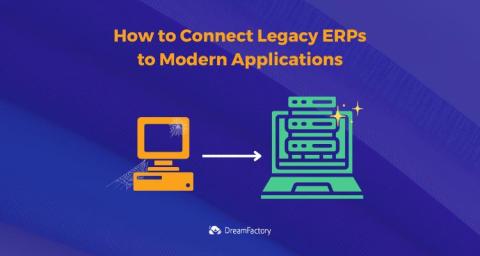
How To Connect Legacy ERPs to Modern Applications

Research shows that legacy systems make up 31% of the technology in organizations. These are systems that might still provide value for your enterprise but are unable to interact with other software tools, rendering them almost useless for your digital transformation objectives. Many legacy systems are ERP systems that exist in data silos, incapable of integrating with the rest of your organization. In this article, we’ll show you how to connect legacy ERPs to modern applications.

Case Study on Oracle Production Scheduling Issues for Batches Integrated from Process Manufacturing

Issues with scheduling of batches in Oracle Production Scheduling tool efficiently and correctly due to the Inability to update the underlying steps and processes within the Batches in Oracle Process Manufacturing that are in process, that are integrated from Process Manufacturing to Production Scheduling is not an issue anymore with the implementation of this integrated solution as described in this case article.