Systems | Development | Analytics | API | Testing

Data Warehouse Design: A Complete 2026 Guide (with examples and templates)

Most data warehouse projects fail. Not because the technology is wrong. Because the design is. Three weeks for a number that should take three minutes. AI agents generating plausible reports nobody can trace. Two ERPs naming the same metric differently. The spreadsheet swamp. The fire drill before every audit. These problems live in the warehouse layer, in how data is modeled, governed, and made available to the people and AI agents that read from it.

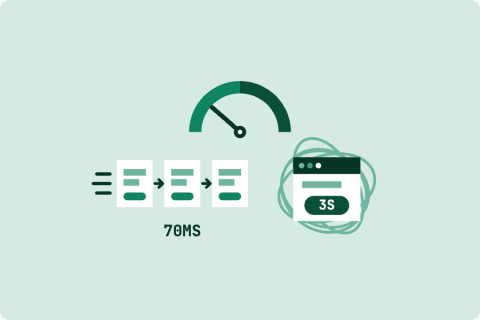
Reality vs. requirements: How to align tests with real user behavior

Not long ago, the answer to who writes tests was simple: the quality assurance (QA) engineer does. They sat downstream of development, received a build, and translated requirements into scripts. It was a defined role with a defined output. That clarity is gone. In 2026, the person or system responsible for test creation might be a business analyst (BA) mapping out a customer journey, an AI agent expanding test coverage overnight, or a QA engineer who hasn’t written a traditional script in months.

Presenting The Bugfender MCP: Use Your AI Agent to Find and Fix Bugs

You asked for it. We built it. Our new MCP server means you can debug directly inside your AI coding tool using real app data from Bugfender. You can use it to: It works with Cursor, Claude Code, Codex and Gemini CLI. This article will show you how to install the Bugfender MCP server, which tools your agent can access, and how the companion skills help you fix bugs faster.

ClearML Joins the Dell AI Ecosystem Program and Launches AI Factory Blueprints, Making It Easier for Enterprises to Operationalize AI

ClearML is deepening its partnership with Dell Technologies by joining the Dell AI Ecosystem Program, announced at Dell Technologies World 2026. As part of this collaboration, ClearML is launching two pre-validated deployment blueprints — for Kubernetes and OpenShift — available in the Dell Automation Platform catalog, giving enterprises a fast path from bare metal to a full AI stack.

Keynote: Building Intelligent Systems on Real-time Data

Confluent CEO Jay Kreps takes the stage alongside industry leaders at data streaming’s biggest event. Together, they’ll show why free-flowing, real-time data has become the key to unleashing the full potential of intelligent systems across every business. From live demos to real-world use cases to industry-changing product announcements, this year’s keynote is essential viewing for anyone looking to maximize the potential of their AI. Which is pretty much everyone. Don’t miss it.

AI Tools for Builders - Confluent's MCP Server & Agent Skills

Your AI coding assistant just learned to speak Confluent. Developers live in their editors. The best platform tools meet them there—and increasingly, that means their AI assistants meet them there too. AI coding tools are already reshaping how developers build, debug, and operate software, but most of them are generalists. They can write an Apache Kafka producer, but they won't know your Schema Registry subjects.

Agentic Fleet Management Architecture for Real-Time Operations

Agentic fleet management is a real-time, event-driven architecture where distributed AI agents continuously process streaming data to make autonomous operational decisions and execute them through closed-loop feedback systems. At its core, agentic systems enable: Unlike traditional systems that react to events after the fact, agentic architectures operate as adaptive, self-optimizing systems.

Your AI Agent Knows What. It Doesn't Know Why.

There's a reason we don't find our keys by scanning every room like a security camera. We replay the tape. We remember the groceries, the front door, the distraction. We reconstruct the *why* to find the *where*. Our brains are commit logs, not snapshots. Most agentic AI systems today work more like the camera — a static frame of the world at a given moment. They store state. They retrieve context. They produce an answer.

How to Talk to Your CFO About AI Gateway Metrics Without Losing Them in the First Slide

Your AI infrastructure is producing financial signals your CFO has never seen. Token consumption is a direct cost line item. Cache hit rate is a margin improvement. Model routing decisions are cost arbitrage events. These things are happening right now, in the gateway layer, with no route to the CFO, which means no route to the boardroom. As the AI connectivity platform owner, you're the person who can build that route.