Happy Earth Day 2025! This year's theme, "Our Power, Our Planet," resonates deeply with Qlik's ongoing commitment to environmental stewardship. We believe that creating a sustainable future requires a collective effort, and we're dedicated to prioritizing and embracing renewable energy sources. Our goal is ambitious: to triple the use of clean energy sources by 2030.
Across the globe, organizations are united by one shared priority: sustainability. While committing to environmental, social, and governance (ESG) initiatives is simply the right thing to do to preserve our planet for future generations, businesses face additional pressure to prioritize sustainability via regulations, expectations from investors, and consumer preferences. Since 2019, thousands of companies have committed to achieving net-zero emissions.
Earth Day gives us all the opportunity to raise awareness, reflect and take action to support a sustainable future. The day, which offers so many ways to get involved, means many things to different people. Fortunately, in the data infrastructure business, there are many areas where we can make improvements to support resilience, efficiency and optimization. At Hitachi Vantara, we’re committed to the principles of sustainability and responsible business practices.
As our cities grow, heavy construction and expansion are putting a significant strain on the environment. Currently, urban areas contribute around 70% of global carbon emissions and consume over 60% of the world’s resources. This means real estate has a big opportunity — and responsibility — to lead the way toward a sustainable future. But how? A vital tool in this effort is Software as a Service (SaaS).
Hitachi Vantara survey finds data demands to triple by 2026, highlighting critical role of data infrastructure in AI success and revealing gaps in data governance, security, and sustainability.
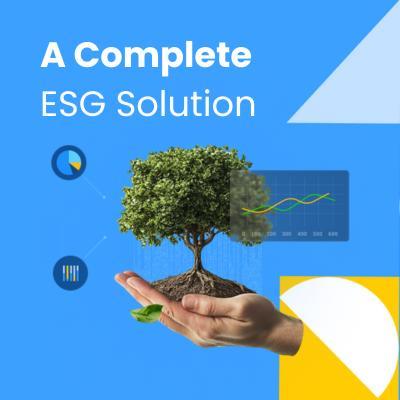
Keboola, the self-service data management platform, develops a comprehensive platform that simplifies Environmental, Social and Governance (ESG) data management. It automates data collection, monitors key performance indicators (KPIs), and provides real-time insights across all client entities. By replacing manual processes, it ensures precision, uniformity, and adherence to ever-changing regulations.
As we mark Climate Week, Qlik reaffirms its dedication to sustainability—both in our own operations and in empowering organizations worldwide to tackle society’s most pressing challenges. The below text is taken from our most recent Impact Report which you can find on our website here. At Qlik, we are dedicated to operating a sustainable business while helping organizations and partners across the globe tackle their and society’s biggest challenges with data.
In this insightful talk, Soumen Deb explores the integration of sustainability into software quality engineering. Learn how greener practices, like reducing energy consumption and optimizing resource use, can align software development with environmental goals. Discover strategies for efficient testing, automation, and code optimization that not only reduce your carbon footprint but also provide cost savings and boost your organization's reputation. Join us to explore the intersection of quality engineering and corporate social responsibility for a sustainable future.
Like many other industries, fintech has also been witnessing the integration of cognitive technologies as a key driving force behind recent transformations. Powerful tools, such as artificial intelligence (AI) and machine learning, are empowering businesses with swift transaction processing, precise data analysis, and optimized resource utilization. Thus, it is apt to say that a future with sustainable fintech software development cannot be mutually exclusive to the aspirations of cognitive technologies.