On a server infrastructure, Go code can be quickly deployed and updated across different installations as needed. It also supports a variety of operating systems and processor designs, which is a significant advantage. Some of the biggest and most well-known projects have been written completely in Go, which has emerged as the preferred language for open-source infrastructure software. For instance, Docker was created completely in Go.
In an API-driven world, error handling is integral to every application. You should have an error handling layer in your Node.js app to deal with errors securely and effectively. In this article, we'll explore: Let’s jump right in!
In our last post, we persisted and restored a collapsed/expanded UI state with Kredis. However, the great pain point with this is that we have to invent a lot of Kredis keys. This time, we'll see how we can avoid this by developing a generalized solution for any DOM node whose attribute states we want to track on the server side. Let's dive straight in!
Data is the heart of business operations. And much of that data is sensitive or regulated. Cyber threat actors know they can benefit financially from your data by holding it for ransom or selling it on the dark web. The most recent Cost of a Data Breach Report 2022 from Ponemon Institute and IBM clocks the average data breach cost at $4.35 million USD (that’s $164 USD per data record). The stakes are high. Your security must be too.
In this post, I will demonstrate how to use the Cloudera Data Platform (CDP) and its streaming solutions to set up reliable data exchange in modern applications between high-scale microservices, and ensure that the internal state will stay consistent even under the highest load.
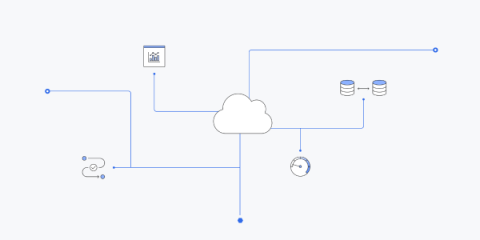
With the advent of cloud services, IT is transforming and evolving from being traditionally data center-centric to data-centric. The data center is no longer a physical location. It extends beyond the walls of the enterprise, to the cloud, and the edge where the majority of data is being generated.