
Systems | Development | Analytics | API | Testing

How to Build a Scalable Enterprise Testing Strategy for Engineering Teams

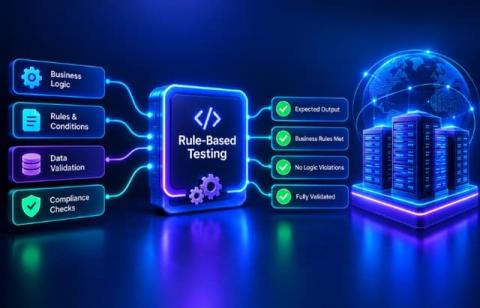
Enterprise software today isn't just complex, it's mission-critical. A single production issue can disrupt operations, impact revenue, and erode customer trust overnight. Yet despite years of investment in enterprise test automation and growing QA headcount, many organizations still ship broken software and miss release windows. The uncomfortable truth? Enterprise software doesn't fail because teams aren't testing enough.

How to Consolidate Multi-Bank Transaction Data With Low-Code ETL

Every finance team managing multiple banking relationships knows the pain: downloading statements from six different portals, copying transaction data into spreadsheets, and spending hours reconciling figures that should match but don't always align. With businesses losing significant productivity due to manual data handling and delayed system synchronization, multi-bank data consolidation has become a critical operational challenge.

Real-Time Fraud Detection Pipelines: How Fintechs Use ETL for Streaming Data

Your fraud detection system analyzes yesterday's transactions while criminals steal millions today. Financial institutions lose an estimated $33 billion annually to card fraud alone, much of it preventable with real-time detection capabilities. Traditional batch processing that analyzes data hours or days after transactions occur simply cannot keep pace with sophisticated fraud schemes exploiting the settlement window gap.

Debug logging for web and mobile apps

Debug logging is a particular form of logging that records detailed information about how an application behaves during execution, so we can identify, understand, and fix issues. This guide will give you a rookie-to-pro guide to debug logging, showing you: By the end, you will have a clear, practical approach to using debug logs effectively in real applications.

From Backlog to Breakthrough: Inova Scales Data & AI with Fivetran and Databricks

Healthcare organizations operate some of the most complex data environments, spanning thousands of systems across clinical, financial, and operational domains. At Inova Health, this complexity created an opportunity to rethink how data could better support analytics and AI at scale.

Open Data Infrastructure: Built for agentic AI

As AI accelerates the pace of change, demanding fresher data, diverse formats, and support across multiple engines, many teams discover their infrastructure was built for reporting, not real-time AI at scale. Open Data Infrastructure is redefining how organizations design for analytics, operations, and AI. By leveraging Fivetran as an interoperable data foundation, organizations can embrace open standards, separate storage from compute, and keep data portable across clouds and engines, preserving adaptability while scaling AI and operational workloads with Databricks.

Building an AI-ready data foundation at Superhuman with Databricks and Fivetran

As Superhuman expanded its AI platform across Grammarly, Coda, Superhuman Mail, and Superhuman Go, more of the business began to rely on timely data from Salesforce, Outreach, Pardot, Stripe, Zendesk, Qualtrics, and other third-party systems. The challenge went far beyond moving data into Databricks. Go-to-market, finance, and customer teams needed faster, reliable access to trusted data without turning every new data request into weeks of custom engineering.

Bitrise Remote Developer Environment CLI: Update iOS App for Xcode 27

Get your iOS app working with recently released Xcode 27 beta using Claude Code running in an RDE. Spin up a trial, and try for yourself! You can power your Agentic AI Development Loop with Bitrise Remote Developer Environments (RDE). Cloud VMs that run on the same infrastructure as Bitrise CI used and trusted by thousands of mobile customers.

Predicting Build Cache time savings with Quick Connect

‍Build Cache can meaningfully shorten CI feedback loops, but only if it’s connected to workflows where it’ll actually make a difference. So how do you figure out which workflows will benefit? That’s the part that’s been easy to get wrong — until now. Quick Connect is a new feature that takes the guesswork out of estimating time savings: it looks at your last 30 days of build data and surfaces the workflows that will benefit themost from caching.

@keploy Stop Mocking APIs Manually | Use Digital Twin Sandboxes and Find Regressions in CI Quickly

Your developers — and your AI agents — need a safe way to test against production-like behavior. Keploy records real API traffic and replays it as a digital twin sandbox, so you can catch regressions before they ship. No manual mocks. No production access. No complex test environment setup. Record → generate tests and mocks → replay in CI.