Systems | Development | Analytics | API | Testing

AI Agent Integration: Gartner Research Confirms Need for AI Control Layer

Three-quarters of enterprises are now piloting or deploying AI agents. But here’s the problem: actually integrating those agents with enterprise applications is proving to be one of the hardest parts of the whole endeavor. The research doesn’t mince words about the challenge. And it maps directly to the infrastructure gap Kong was built to address..

3 ways Fivetran uses AI internally

Like many companies, Fivetran has recently piloted a number of projects and internal tools using AI. AI offers the potential to augment or accelerate a huge range of day-to-day business tasks, including better understanding and prioritizing customer requests, surfacing trends across multiple business units, and automating customer communications. The key to delivering value using AI is to ensure that it has access to quality data and a data infrastructure capable of providing it.

AI code created a new testing problem | From the Bear Cave Ep. 3

SmartBear’s study Closing the AI software quality gap found that 60% of teams have already experienced quality issues tied to AI-generated code, evidence of how increased abstraction is changing how software gets built. When development shifts from well-defined requirements to prompts and generated outputs, it becomes much harder to understand what the system is actually supposed to do, and what you should be testing against.

Conversation tree branching in @ably/ai-transport

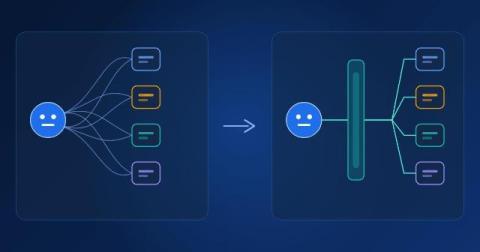
Picture a developer pair-programming with an AI assistant. The model returns a function that almost works. The developer asks it to try again. The second attempt is worse. They want the first one back. In a linear chat, that history is gone, or it's a third bubble in the thread that pollutes context for every future turn.

The Role of Microservices in Digital Banking Transformation: Architecture, Migration & Implementation Guide (2026)

A customer opens a banking app at 9:02 AM to check a failed payment. The balance looks wrong. Support says, “It’s a system delay.” The transaction finally reflects several hours later. That’s not a UX problem. It’s an architecture problem. Traditional banks still run on tightly coupled, monolithic systems designed for batch processing, not real-time expectations. But customers today compare banking experiences to Google Pay or Apple Pay, not legacy core systems.

Two Wheels, One App: The Complete Guide to E-Scooter App Development

‍It’s 8:47 AM in downtown Bangalore. A professional in a crisp blazer books a sleek electric scooter in seconds from his phone. He arrives at his office building in 11 minutes, the same commute that would have taken 40 minutes by car. Half a world away in Paris, a tourist taps her way through the Lime app to zip from the Marais to the Eiffel Tower without a single transfer. In Austin, a grad student ends her morning run, grabs a Bird scooter from the nearest docking zone, and heads to campus.

Why GitHub Actions Isn't Built for Mobile CI/CD (And What to Use Instead)

GitHub Actions is one of the best CI/CD platforms available today. For web apps, backend services, and infrastructure automation, it’s hard to beat. Deep GitHub integration, a massive marketplace of community actions, flexible YAML-based workflows, and a pricing model that’s generous for open-source projects. There’s a reason it dominates. But if you’re building mobile apps, especially for iOS, GitHub Actions starts to fight back. Not because it’s a bad tool.