Systems | Development | Analytics | API | Testing

Kotlin Extension Functions: Add Functionality Without Modifying Code

Imagine you own a car. It’s reliable, runs smoothly and gets you where you need to go. But one day, you realize you need a GPS navigation system for better routes. What do you do? Would you redesign the entire car just to integrate GPS, or would you simply install a GPS device on the dashboard? Of course, the smarter choice is to add the GPS instead of modifying the car’s built-in system. This is exactly how a Kotlin Extension Function works.

The EU AI Act: Key Implications for Using Data in the Modern Enterprise

The EU AI Act is a new law changing how organisations develop and deploy AI-powered solutions worldwide. Complying with it is a chance for organisations to stand out and build trust with customers through responsible AI use — all while continuing to innovate. As predicted by McKinsey and others back in 2023, AI (specifically generative AI) has become a key part of daily business operations across many industries.

Test Smarter, Not Larger: How SLMs Are Outperforming Massive AI Models in QA Efficiency

For years, the tech world has been captivated by the sheer scale of Artificial Intelligence. Headlines trumpet models boasting trillions of parameters, hinting at a future where massive AI effortlessly solves our most complex challenges. Giants like GPT-4 and Gemini Ultra, with their vast architectures, have set the benchmark. Yet, in the specialized arena of software quality assurance, a fascinating counter-narrative is emerging: sometimes, smaller is indeed better.

Why Data Teams Are Best-Positioned For Agentic AI Success With Data Integration and MCPs

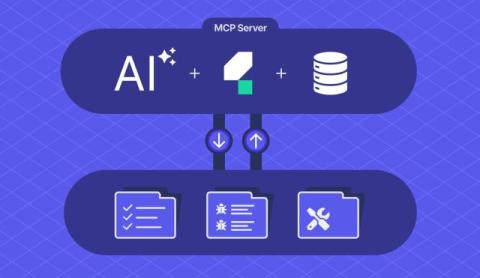
Building AI agents is the first step, and it’s positive to see enterprises exploring this avenue. But it’s only the first step. For true enterprise value, these agents must seamlessly connect to your data ecosystem through robust integration, standardized protocols, and be guided by knowledgeable data teams. The need to give AI agents access to data and connect them to the necessary tools and functions has led to the creation of the Model Context Protocol (MCP).

Is Data Integration the Real Engine Behind Effective AI Agents? #aiagents

Jay Mishra, our Chief Product and Technology Officer, explains why quality data is the true driving force behind successful AI agents. He also shares how Astera AI Agent Builder seamlessly connects to both internal and external data sources, ensuring that your AI agents are data-driven and ready to deliver powerful results.

Securing AI Interactions: Crossing the Hurdles of MCP Authorization

The rise of large language models (LLMs) and AI-powered applications brings incredible potential, but also poses significant security challenges. These applications have gotten much more useful with the emergence of agentic approaches and the ability to call out to different libraries, systems, and most importantly, to different APIs in order to take actions. They have moved from being a question answering resource to being able to do work, shop on your behalf, book travel, and update code.

Introducing Asgardeo MCP Server

Today, we're excited to officially release the Asgardeo MCP Server, enabling developers to securely manage their Asgardeo organizations using natural language—right from their favorite code editors like VS Code, Claude Desktop, Cursor, Windsurf, and other MCP-compatible clients. Asgardeo already supports Login Flow AI and Branding AI, making it easier to build secure, customized login and registration experiences using plain language.