Systems | Development | Analytics | API | Testing

Why 90% of AI Projects Never Leave the Pilot Phase? #ai #shorts #softwarearchitect

Struggling to scale your AI? You aren’t alone. Shafrine from WSO2 identifies the bottleneck holding companies back: Data Silos. Without integration, your AI agents lack the "context" needed to be useful in a production environment. Learn how to bridge the gap between a "cool pilot" and a "scalable enterprise agent" by fixing your fragmented workflows.

How Manufacturing Leaders Deploy AI Faster with Governance-First Architecture

AI workflows for manufacturing need to be deployed quickly. Quality control systems, predictive maintenance tools, and supply chain optimization algorithms may be going live, yet compliance infrastructure is lagging behind. The result is a familiar pattern: pilots that prove out technically but stall before production because they can’t clear audit, safety, or regulatory review.

From Executors to Strategic Partners: The Evolution of Software Vendors in the AI Era

Artificial intelligence is transforming the global software industry. Some analysts refer to this shift as a “SaaS apocalypse,” with traditional software companies losing over a trillion dollars in market value. Historically, software vendors executed client visions by writing code. Now, as clients articulate their needs and AI generates code, the industry faces a critical question: What role remains for software vendors? This requires a fundamental shift.

Anthropic Accidentally Leaked Claude Code's Entire Source - Here's What Was Inside

On March 31, 2026, security researcher Chaofan Shou noticed something odd: the complete source code of Claude Code — Anthropic's flagship AI coding CLI — was sitting in plain sight on the public npm registry. 512,000 lines of TypeScript. 59.8 MB of source maps. Everything. The irony? The code contains an "Undercover Mode" specifically built to prevent internal Anthropic secrets from leaking into public commits. They built a secrecy subsystem, then accidentally published everything.

The Agent Era Has a Data Problem. Qlik Solves It.

It’s clear that we are in the early innings of an unparalleled shift in how knowledge work gets done across the board. If you pull forward the changes we’ve already seen from teams who have adopted agents in software development and apply them to broader categories of knowledge work, you can see how these patterns will lead to a fundamental rethinking of the relationship and responsibilities between humans, software, and data.

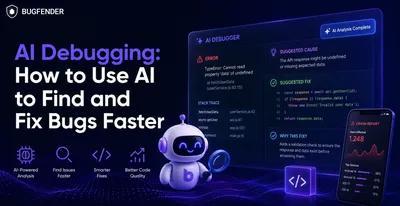
Why AI-Generated Code Needs AI-Powered Testing: The Validation Gap Developers Are Missing

You have an AI coding assistant open. You describe a function in plain language, it generates 40 lines of clean, well-structured code in under ten seconds, you review it briefly, it looks right, and you ship it. That workflow is now routine for millions of developers. The speed is real. The output looks authoritative. The problem is that looking right and being right are not the same thing.

AI Infused Development of Intelligent & Smart Traffic Management System

The traffic visuals you see in movies shot in the USA, UAE, or even the UK, for that matter, you know how managed and clean that looks. But do you still think that it’s all fiction? Well, if you are, then you’ve got it totally wrong. The way the UAE, the USA, and even Japan manage their traffic is just phenomenal, and it’s all thanks to a smart traffic management system you didn’t know about.

AI Testing Best Practices - Why Human Governance Separates Real AI Platforms from Hype

There is a scenario playing out in QA teams everywhere right now. A team adopts an AI testing tool, runs it for the first time, and gets 300 test cases in minutes. The demo worked. The ROI math looked great. But three sprints later, 60 of those test cases are validating requirements that were updated in the last sprint. Twenty more test a user flow that was deprecated. The AI performed exactly as advertised. The governance system never existed.