Systems | Development | Analytics | API | Testing

How to Dive into API Behavior and Integrate Faster

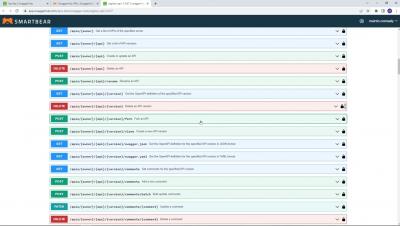
If you don't understand how an API works, you can't get the best out of it. That's one problem. The other is that they keep increasing in number, but the quality of the documentation for each of them doesn't. Lack of clear, quality documentation leads to more difficulty for developers, and with more difficulty comes less chance they integrate the API. Which could also be your API. That's where API exploration tools like SwaggerHub Explore come in handy to make this all way simpler.

From Kinesis to Kafka

At the beginning of 2021, a brand new data team was assembled to build a real-time data platform for Kong’s SaaS platform, Konnect. Our mission is to provide top-notch real-time API analytics features for Konnect customers. V1 platform architecture The initial backend consisted of three main components: an ingestion service to handle incoming telemetry requests, an intermediate message queue, and a real-time OLAP data storage.

GraphQL Authorization at the API Gateway with Kong Konnect and OPA

In this blog we are going to learn about the technical challenges behind solving GraphQL authorization and how many organizations resolve it today. Then discuss how a Kong / OPA integration can help drive security standards in this space and bring some parity with REST API solutions. Last, we will end with a quick tutorial.

Implementing a Hybrid Kong Konnect Data Plane in Amazon ECS

Application Modernization projects often require their workloads to run on multiple platforms which requires a hybrid model. Kong Konnect is an API lifecycle management platform delivered as a service. The Control Plane, responsible for admin tasks, is hosted in the cloud by Kong. The Data Plane, totally based on Kong Gateway, can be deployed across multiple environments including VMs, Kubernetes, Docker, etc.

API linting based on custom rules

At present, API definitions are validated against the default OpenAPI schema upon import and when being edited in the publisher portal. In certain scenarios, such as the validation of fields like email or name, a custom validation approach may be required. This implementation allows administrators to enforce custom rules for API validation, helping to standardize and keep API definitions clean by validating against a specified set of custom rules inside WSO2 API Manager.

ELK Based On analytics with WSO2 Micro Integrator

Analytics is a main part of any deployment which enables the Monitoring of the availability, performance and usage of it’s components. WSO2 Micro Integrator has introduced operational analytics on top of ELK stack which is one of the leading analytics solution in the market. With this solution, a user can monitor the usage of each synapse component individually and identify issues, bottlenecks and improve the reliability and performance of the integration flow.

OpenTelemetry based Distributed Tracing for WSO2 API Manager

Tracing is one of the three pillars of observability. Tracing an API call in WSO2 API Manager is important to observe, identify possible bottlenecks in an API invocation path, and debug them. WSO2 API Manager facilitates tracing API invocation paths and publishing the traces based on the OpenTelemetry standard, using multiple tracers, namely: OpenTelemetry Protocol (OTLP), Jaeger, Zipkin, Log & Custom Tracer. This demo outlines important concepts of OpenTelemetry based distributed tracing in WSO2 API Manager, followed by a demonstration of publishing traces using the OTLP Tracer to Elastic APM, when invoking a sample API.