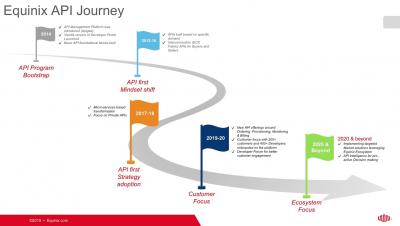
Equinix's API-powered Digital Transformation Journey
Listen in to hear from Ramchandra Koty, Director of Engineering at Equinix as he shares best practices and lessons learned from the company’s API-powered digital transformation journey.


We are thrilled to announce the release of Kong Ingress Controller 0.6! This release builds on the previous releases and unlocks integrations and features, including the Admission Controller, integration with Kuma and Istio, and support for Kustomize native configuration management.
Editor's note: Today we hear from Dang Nguyen, API Platform Product Owner at Experian, on how the company uses the Apigee API management platform to digitally transform from a traditional credit bureau to a true technology and software provider. Read on to learn how Experian uses APIs to help businesses make smarter decisions and individuals take financial control.
As outlined in a previous article on security challenges for microservices, DevOps are getting more widely distributed, spread thin, and forced to plan for higher levels of interactivity as well as evolving national security “backdoor” measures. Microservices, born from a still-emerging DevOps laboratory environment, can be deployed anywhere: on-prem, in the public cloud, or a hybrid implementation.
We are excited to announce the release of a new open source project, Kuma – a modern, universal control plane for service mesh! Kuma is based on Envoy, a powerful proxy designed for cloud native applications. Envoy has become the de-facto industry sidecar proxy, with service mesh becoming an important implementation in the cloud native ecosystem as monitoring, security and reliability become increasingly important for microservice applications at scale.
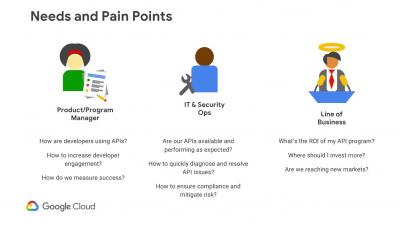
In my experience as a digital consultant for Google Cloud’s Apigee team, I’ve found that when a technology gets classified as “middleware,” it’s often encumbered with a scarlet letter of sorts. Business leaders find it unexciting — so much so that they often resign it to the purview of technology professionals and don’t spare a second thinking about it.