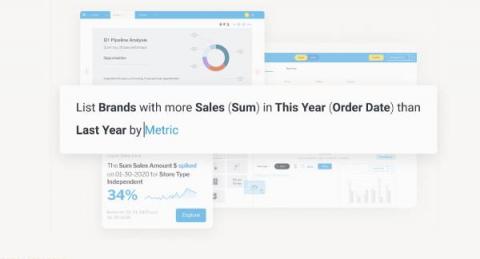
Modern data and analytics leaders know that every business user is different. No two marketers or finance managers will use data in exactly the same way because no two share the same contextual view or understanding of the business. Their challenges are as nuanced as they are complex. And they need insights tailored to their specific needs if they are to be successful at solving business problems with data. Unfortunately, traditional BI tools treat everyone like carbon copies.
Last week in the BigQuery reference guide, we walked through query execution and how to leverage the query plan. This week, we’re going a bit deeper - covering more advanced queries and tactical optimization techniques. Here, we’ll walk through some query concepts and describe techniques for optimizing related SQL.
In our previous blog, we talked about the four paths to Cloudera Data Platform. If you haven’t read that yet, we invite you to take a moment and run through the scenarios in that blog. The four strategies will be relevant throughout the rest of this discussion. Today, we’ll discuss an example of how you might make this decision for a cluster using a “round of elimination” process based on our decision workflow.
“40% of all enterprise workloads will be deployed in CIPS [cloud infrastructure and platform services] by 2023, up from only 20% in 2020.”.As the cloud permeates every aspect of business, decision-makers must make critical choices regarding infrastructure at every turn. Their answers will ultimately determine if every part of an organization is empowered to move forward in a cohesive way to reach business outcomes.
In traditional data warehouses, specific types of data are stored using a predefined database structure. Due to this “schema on write” approach, prior to all data sources being consolidated into one warehouse, there needs to be a significant transformation effort. From there, data lakes emerge!