

Delivery Hero’s, Mike Gerasymenko’s (Staff iOS Engineer), took a quick 15-minute session at this year’s Mobile DevOps Summit 2023 on ‘Making your app modular’. Let's dive in to see why it was one of the most-watched sessions of the two-day Summit.
Is cost optimization at the top of your agenda? If so, it’s likely business process automation (BPA) has caught your attention. BPA combines a number of technologies to help organizations orchestrate, automate, and optimize their business processes. BPA delivers cost optimization by upping your efficiency and refocusing your talent on higher value work, but it also fosters the agility your organization needs to succeed in a rapidly changing world.
NodeJS is a JavaScript runtime environment for running JavaScript applications outside the browser environment. It’s asynchronous and event-driven, meaning it doesn't block the event loop - making NodeJS highly suitable for the development of server-side web applications. With around 50,000 open source packages available through npm (Node Package Manager), NodeJS facilitates the seamless backend extension. The GitHub repository has 99k stars and 27.5k forks demonstrating an active community.
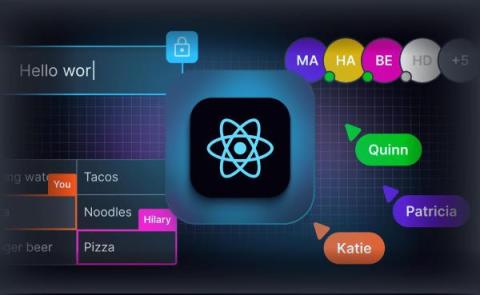
We are excited to announce that the Ably Spaces SDK now includes support for React Hooks. This means that developers can integrate collaborative features into their React-based applications in an efficient and idiomatic way. To help you quickly get started we have created a set of React-based starter kits for the four key collaborative features supported within the Spaces SDK - jump to these now!
As a Java developer, you'll frequently encounter stack traces in your work. By default, these stack traces are displayed on the console when unhandled exceptions occur. However, it's essential not to merely have a superficial understanding of what stack traces are and how to utilize them. This article aims to provide a comprehensive explanation. A call stack is often defined as the current stack of operations or a representation of the ongoing program flow.
PHP, one of the world's most popular server-side scripting languages, powers a significant portion of the internet's dynamic web applications. While PHP is renowned for its flexibility and ease of use, it is not immune to the challenges that come with complex software development. One such challenge is the occurrence of segmentation faults, elusive errors that can leave developers scratching their heads in frustration.
Because of the asynchronous nature of Node.js, it's crucial you set timeouts to ensure the responsiveness of your application. Node.js timeouts help prevent indefinite waiting and let your backend handle situations where tasks take longer than expected. Thanks to timeouts, you can control the maximum duration allowed for incoming and outgoing requests. In this article, we'll look at the different types of timeouts and how to set them in vanilla Node.js and Express.