
Systems | Development | Analytics | API | Testing

SAP Sapphire 2026 highlights: Quality for the "Autonomous Enterprise"

The 2027 S/4HANA deadline still looms large in the minds of SAP customers, but at this year’s SAP Sapphire event, SAP worked to move the conversation beyond cloud migration alone. Instead, they introduced a broader redefinition of what it means to be an “Autonomous Enterprise.” At the center of this new Autonomous Enterprise strategy is agentic AI. SAP envisions the future enterprise as one that can leverage its business data to power agents across its ERP applications.
How to Add Your First Streaming Transformation with Flink

A streaming transformation is a continuous operation that processes events as they arrive, applies logic in real time, and emits transformed results immediately—without waiting for batch jobs to complete. In Apache Flink, a streaming transformation runs continuously, reacting to each event from a stream. This enables real-time data transformation directly on live data.

Is WebSockets enough for AI chat?

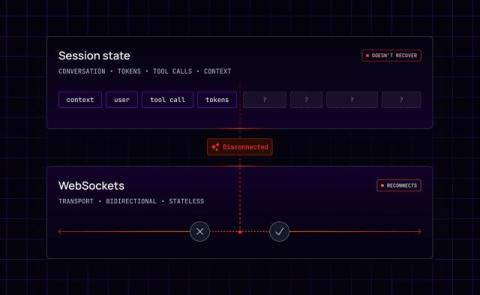
WebSockets are the right protocol for production AI chat. But that fact doesn’t prevent the failure most teams hit first. An enterprise load balancer closes the idle connection at 60 seconds during a tool execution wait. Your reconnect logic fires in under a second, the agent keeps running server-side, and the client receives nothing from the gap. No tokens, no tool call results, no context. The reconnected socket has no view of what happened while it was down.

How to Detect and Fix Flaky Tests in Your Mobile CI/CD Pipeline

Every mobile engineering team hits the same wall eventually. A test starts failing — but only sometimes. You re-run the build and it passes. You merge the code. Three days later it fails again. Nobody can reproduce it locally. The test stays red for a week while three engineers waste afternoons chasing it. Then someone adds a comment that says “known flaky, ignore” and that test quietly continues blocking pipelines for the next six months.

The new era of Healthcare Modernization in 2026 & beyond

Is your legacy healthcare system holding you back? Would you still wear a suit that no longer fits, just because it once looked great? Probably not. The same logic applies to your IT infrastructure. Healthcare organizations often grow comfortable with legacy systems simply because they’ve always worked. But what once worked well may now be putting your operations, patients, and reputation at serious risk.

Load Testing vs Stress Testing: Key Differences and When to Use Each

Load testing and stress testing are not the same thing, even though the terms get thrown around interchangeably in standups, RFPs, and vendor pages. Both put traffic against your service, but they answer different questions. Confusing them costs you either money (over-scoping a test) or a 3 a.m. incident (under-scoping one). This is the short version, then the long one. Is Your Infrastructure Ready for Global Traffic Spikes?

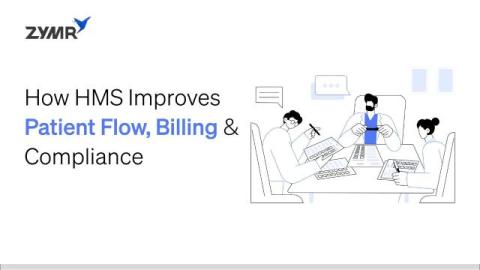
How a Hospital Management System Improves Patient Flow, Billing & Compliance: A Practical Guide

In an era where healthcare margins are tightening and regulatory scrutiny is at an all-time high, hospitals can no longer afford to operate with siloed systems. The traditional disconnect between clinical operations and financial administration creates a black hole where data gets lost, patients wait too long, and revenue evaporates through billing errors. The solution lies in a robust, centralized hospital management system (HMS).

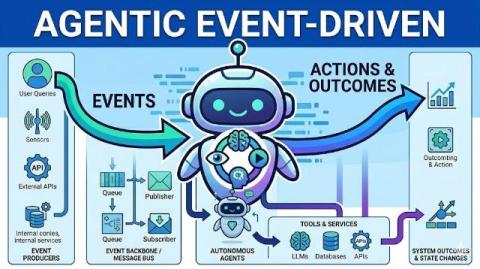
Autonomous Agentic Event-Driven Systems Architecture

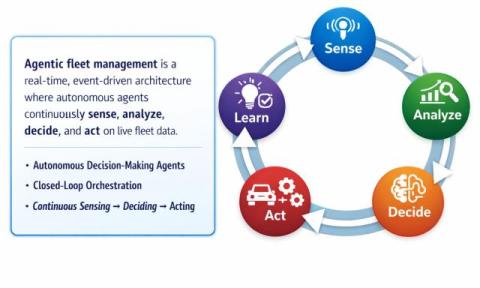
Autonomous / agentic event-driven systems are a class of AI-native architectures where software agents continuously sense events, reason over shared state, take actions, and learn from outcomes—all in real time and without human-in-the-loop orchestration. At an architectural level, these systems combine event streaming, stateful processing, and agentic decision layers to form closed-loop AI systems capable of operating independently at scale.

Enterprise Knowledge Management with RAG for Digital-Native Companies

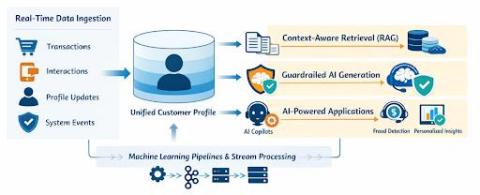
Enterprise knowledge management RAG (Retrieval-Augmented Generation) is a production-grade AI architecture designed to connect Large Language Models (LLMs) securely to a continuous, real-time flow of proprietary corporate data. Unlike basic RAG implementations that rely on static document uploads and batch-processed vector databases, an enterprise RAG architecture utilizes event streaming to ingest document updates, regenerate embeddings, and synchronize context in real time.

RAG and GenAI for Regulated and Public Sector Architectures

As a cloud engineer, I’ve seen organizations rush to implement Generative AI, only to hit a brick wall when the Chief Information Security Officer (CISO) asks about data residency or PII leakage. In the public sector and regulated industries like healthcare or finance, moving fast and breaking things isn't an option.