Systems | Development | Analytics | API | Testing

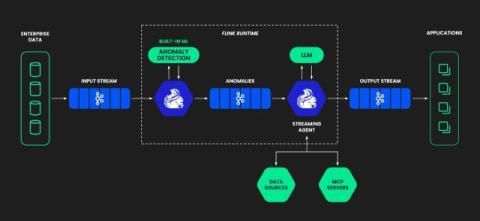
Detecting the Unexpected: Built-in Real-Time Anomaly Detection With Confluent Cloud for Apache Flink

At Confluent, we've been talking to customers about Streaming Agents—intelligent systems that work in the background responding to system events instead of to human chat inputs. The key question has been: What triggers these events? The signals have to be of high quality for an agent to act on since feeding raw events to an agent can be wasteful and overwhelming. A powerful pattern has emerged: agentic investigation and remediation of anomalies.

Connect SQL Server to ChatGPT via DreamFactory: Step-by-Step Guide

In just a few steps, you can link your SQL Server database to ChatGPT using DreamFactory, eliminating the need for custom API development. DreamFactory automatically generates secure REST APIs for your database, enabling ChatGPT to interact with your data effortlessly. Here's a quick breakdown: What You Need: SQL Server instance, DreamFactory account, API key, and OpenAI's ChatGPT API access.

From Browser to Prompt: Building Infra for the Agentic Internet

A burgeoning cutting-edge technology has been fundamentally transforming how we build automation inside disruptive businesses: agentic AI. The impact of agentic AI is already shaping up to be massive. And agentic adoption is soaring: Kong's Agentic AI in the Enterprise report found that, of those with visibility into their organization’s plans, 90% say their companies are actively adopting AI agents.

A Deep Dive Into V Software Development And The V-Model Approach

In the high-speed world of software development, the label V Software Development can suggest two distinct but connected concepts. On one hand, it denotes software development with the contemporary V programming language—a language intended for simplicity, efficiency, and security. On the other hand, it can symbolize the V-Model Software Development life cycle, a traditional model of software development that is characterized by structure, order, and verification at every phase.

Test Case Management: Tools, Templates & Strategy

Effective test case management transforms scattered testing efforts into a systematic quality assurance powerhouse. Start treating test case management as a strategic investment, not an administrative burden. Poor software quality costs the U.S. economy at least $2.41 trillion annually, according to the Consortium for Information & Software Quality's 2022 report. Yet many QA teams still struggle with scattered test cases, missing documentation, and zero visibility into testing progress.
Sponsored Post

Settle Your QA Debt Before the Bugs Start Breaking Kneecaps

In Part One, we discussed how QA debt builds silently over time - causing slower releases, late-night firefights, and unpredictable test cycles. The next step is understanding how much debt you have and where it hides. This post goes deeper into measuring QA debt - what to track, how to collect data, and how to use those insights to create a sustainable plan for improvement.

Part 3: Building a Production-Grade Traffic Capture and Replay System

At a previous company, we had over 100 microservices. I’d make what seemed like a simple change to one service and deploy it, only to discover it broke something completely unrelated. A change to the user service would break checkout. An update to notifications would break reporting. We spent more time fixing unexpected bugs than shipping features. The problem was our test scenarios were too simple.

Writing Comprehensive Integration Tests for Django Applications

Integration testing verifies that multiple components of your Django application work together correctly. Unlike writing unit tests that examine isolated functions or methods, the Django integration testing process validates entire user workflows, tests database transactions, and system interactions. Django's testing framework provides specialized tools for creating realistic automated test scenarios that mirror production environments.

Accelerating QA With Xray's AI Test Case Generation

Software teams are shipping faster than ever — but testing still moves at human speed. Agile and DevOps have redefined delivery cycles, yet QA teams are often left struggling to keep up. Between evolving requirements, multiple environments, and constant regression demands, testers are expected to do more with less. One of the biggest bottlenecks? Test case design. Creating test cases manually is slow, repetitive, and prone to oversight.