
Systems | Development | Analytics | API | Testing

Automated testing vs. autonomous testing

Autonomous testing is one of the most talked about developments in software quality right now. It shows up in analyst reports, vendor pitches, conference talks, and job descriptions – often in the same breath as automated testing. Most of those conversations treat the two as interchangeable, or worse, position autonomous testing as simply a smarter, more advanced version of what teams already do.
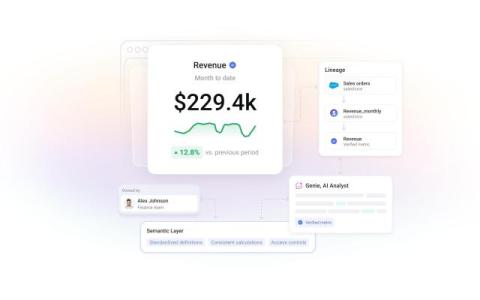

New: Trusted data for the people and the AI making decisions on it

Ask three people in your company to pull the number of active customers this month, and you’ll probably get three different answers, even though each person labeled the metric the same way. One counts everyone who logged in, another counts only paying users, and a third filters down to a single plan tier. Nobody is wrong here. They’re all working from real data; they just never agreed on a single definition. Do that enough times, and the data itself becomes the thing everyone argues about.

Mobile testing, reimagined: How Reflect's Mobile Testing Changes QA

Mobile application users expect flawless experiences on every device, every OS version, and every screen size, and they have little patience for anything less. Yet for QA teams, achieving that level of coverage traditionally means wrestling with brittle automation scripts, complex Appium setups, and endless device fragmentation. Even after all this manual effort, your mobile app quality could contain unseen gaps.

Latest Linux updates for June 2026

‍An outdated build environment can slow down your team, introduce security risks, and cause hard-to-debug issues. With our upgraded Linux stacks, you get a faster, more secure, and fully maintained build environment: so your team can focus on shipping great apps, rather than managing infrastructure. Ubuntu Noble 24.04 - Bitrise 2025 Edition is now available as a stable stack, bringing Noble Numbat as the default Ubuntu version to Bitrise.

How to Measure Embedded Analytics ROI for Busy End Users

Most analytics programs fail the ROI test for one simple reason: they measure dashboard output, not workflow impact. A team can ship reports, charts, and alerts, yet still miss the real question: does the analytics change what busy people do next? That is the core issue for embedded analytics ROI. How do we measure whether embedded analytics actually delivers business value for busy end users, frontline teams, and executives?

Moving from Probabilistic Reasoning to Deterministic Execution

Generative AI systems do not fail because models are weak. They fail because architectures are incomplete. Once organizations accept that prompts cannot guarantee reliability, a new challenge emerges: how to design systems that systematically convert successful AI behavior into repeatable, governable, and auditable workflows.

Agentic apps that go beyond chat

You are planning a trip with an AI assistant on your laptop. You are chatting with the agent, and as you progress it is dropping pins on a map, building a day-by-day itinerary, adding up a budget, and streaming its reasoning as it goes. The state of your interactive session is a combination of the chat history, the synthetic UI constructed by the agent during that process, and structured state, the itinerary, arising from the decisions you each make.