Systems | Development | Analytics | API | Testing

Understanding ERP and Ecommerce Integration

Our Five Key Points: Effective ERP and Ecommerce integration means ensuring your online retail business is taking advantage of every aspect of your enterprise resource planning (ERP) tools. Your ERP gathers a range of digital information about your business, from finances to inventory management. This data could provide insights that boost sales or drive marketing campaigns.
Appian 22.2: New Look. New Approach.

In our 22.1 release, you learned about total experience—an opportunity to connect customer experience (CX), employee experience (EX), user experience (UX), and multiexperience (MX) to transform your organization from every angle. If you’re able to harness this opportunity, you will outperform competitors by 25% in satisfaction metrics for both CX and EX.

Moving Enterprise Data From Anywhere to Any System Made Easy

Since 2015, the Cloudera DataFlow team has been helping the largest enterprise organizations in the world adopt Apache NiFi as their enterprise standard data movement tool. Over the last few years, we have had a front-row seat in our customers’ hybrid cloud journey as they expand their data estate across the edge, on-premise, and multiple cloud providers.

Data Engineer vs Analytics Engineer: How to choose the career that's right for you

A little over a year ago, I found myself feeling stuck in my role as a data engineer. I had majored in business in college and was looking to connect more with that side of things. I enjoyed my tasks as a data engineer but I wanted more flexibility and creativity. I wanted to be involved in business decisions rather than my tasks already being decided for me.

8 Microservices Trends to Watch in 2022

If you have been following technological trends over the years, then you must have come across the word: microservices. Popularly known as microservices architecture, microservices replaced monolithic architectures. With software development becoming more complex by the day, software applications require regular updates and improvements. To simplify this process, applications are now developed by breaking it down into smaller components that collectively work to serve their users.

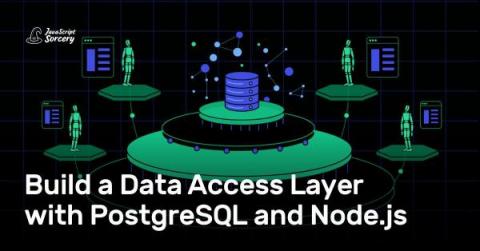
Build a Data Access Layer with PostgreSQL and Node.js

The Data Access Layer (DAL) is the most critical part of any application. This is where the code integrates with an external source of truth like a database. In this take, we'll show you how to build a DAL that talks to Postgres via Node. Then we'll go into best practices like Clean Architecture and what this means in practical terms. Ready? Let’s go! First, a quick note about the code: The code will have modern niceties like TypeScript, unit tests, and will tackle potential scalability issues.