
Systems | Development | Analytics | API | Testing

Easy Cross-Platform cgo Builds

When I first started writing Go software a little over a decade ago, one of the features I found particularly intriguing was the ability to build statically-linked binaries for multiple operating systems and architectures without a lot of headache. This build toolchain feature is widely relied upon by nearly all Go developers, especially when needing to build multi-arch container images destined to be run in a Kubernetes cluster consisting of amd64 and/or arm64 nodes.

Unlock Cheaper & Faster AI Testing: Mocking Claude and MCP

Generative AI is quickly becoming ubiquitous in the software development space, with tools like Anthropic’s Claude offering rapid methodologies for code iteration, testing, and deployment. As new solutions, such as MCP (Model Context Protocol), are created to make integration more seamless, enterprises are adopting these AI solutions to optimize their development processes, a familiar challenge repeatedly arises: cost.

Getting Started with gRPC: A Developer's Guide

Within the realms of microservices and distributed systems, gRPC has emerged as a cornerstone technology. Its adoption by tech giants like Google, Netflix, and Square underscores its capability to facilitate high-performance, scalable inter-service communication. Built as a modern take on the traditional Remote Procedure Call (RPC) paradigm, gRPC enables services, potentially written in different languages, to communicate efficiently and reliably across networks.

4 Tips for Developing Model Context Protocol Server

The Model Context Protocol (MCP) is rapidly becoming the connective tissue for agentic AI systems and IDE tooling. Whether you’re building a dev tool that integrates with LLMs or enabling a context-aware API backend, standing up an MCP server is a rite of passage. But MCP is still in its early days and there are some sharp edges. Here are four practical shortcuts to fast-track your MCP server development so you can skip the boilerplate and get to the good stuff: intelligent tooling.
Sponsored Post

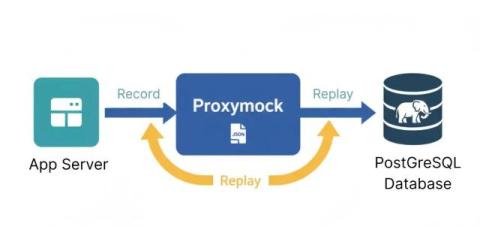
Modernize Test Data Management with Traffic Replay

In software testing or platform engineering, having realistic data is crucial. For years, teams have relied on Test Data Management (TDM) to copy entire production databases, scrub any sensitive information, and then spin up test environments from these sanitized data sets. While TDM gets the job done, it can be costly, time-consuming, and can quickly become outdated. The issue of outdated data becomes more pronounced as deployment velocity increases and back end dependencies become more diverse (think: microservices).

Using Proxymock with AWS Services

Amazon Web Services, or AWS, offers a variety of cloud services ranging from AWS resources such as CDNs and data lakes to cloud computing and transformation services such as compute resources, virtual servers, and dynamic availability zones. For this reason, AWS cloud is one of the most broadly adopted cloud solutions, offering a global network of solutions at generally lower costs compared to on-premises solutions.

Using Proxymock with GCP Services

Google Cloud Platform, or GCP, is a cloud resources collection offered by Google for enterprise and standard users. GCP offers a wide range of cloud services, including compute, storage, networking, security, analytics, and even machine learning models. Google Cloud products are the backbone of many cloud applications. Google Cloud allows flexibility with the scalable and predictable cost management.
Sponsored Post

Six Lessons from Production gRPC

In the half-decade since gRPC became part of our production ecosystem, we've encountered a range of challenges and discovered a few hidden pitfalls that can trip up even the most experienced teams. Below, we'll walk through some of the core lessons learned, with tips, best practices, and examples drawn straight from the trenches.

Automating API Mocks in Your CI Pipeline with proxymock

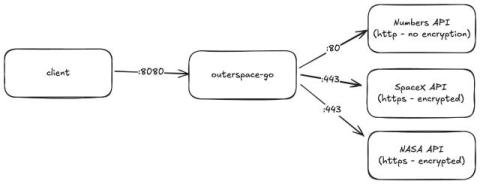
When running tests in a CI/CD pipeline, relying on external APIs can introduce instability, slow down execution, and even lead to failed builds due to rate limits or API downtime. Fortunately proxymock provides a solution by capturing API interactions and running a local mock server, enabling fully isolated and repeatable tests. In this blog, we’ll demonstrate how to integrate proxymock into a GitHub Actions CI pipeline using a demo app called outerspace-go.

How to Mock AI APIs Using proxymock

APIs often represent the cutting edge of the technology space. This is especially true with Artificial Intelligence – as AI has evolved from speculative technology to mass adoption, it has shown up significantly in APIs as a modality and mechanism. However, as with all new technologies, using AI APIs comes with significant challenges.