Systems | Development | Analytics | API | Testing

Finding the Ghost in the Machine

The industry is rapidly moving towards deeper AI integration than ever before. What was once simply focused on chatbots or recommendation engines has pivoted significantly to AI systems communicating with other AI systems. These AI tools are leveraging multi-agent workflows to accomplish complex tasks that traditional systems have struggled with. Innovation without validation is a liability. Any developer worth their salt will know that these systems require ample testability and validation.

Mastering Kubernetes Testing with Traffic Replay

Kubernetes has become the backbone of many modern application deployment pipelines, and for good reason as a container orchestration platform, Kubernetes automates the scaling, deployment, and management of workloads, allowing developers to make their applications easier to manage and deploy at scale without worrying about their service’s dependencies, their user’s operating system, or the intricacies of their data center or infrastructure provider.

Considerations for Testing gRPC Streams

If you’ve spent any time building cloud-native systems, you’ve probably tripped over the tricky beast that is gRPC streaming. It’s powerful, flexible, and feels like magic when it works. But the minute you need to test it? Suddenly, you’re in “hold my coffee, I need a week” territory. One of the most common places we see gRPC streams in the wild is when clients connect to asynchronous message buses like Google Pub/Sub.

Shift Left on Performance Testing - Without Killing Developer Velocity

Traditional performance testing often comes late in the delivery cycle, typically just before release. By then, performance issues are usually quite expensive to fix, can delay deployments, and frustrate development velocity. A Shift Left testing approach addresses this by integrating performance testing early in the development cycle so issues surface while they’re still easy and cheap to fix.

Don't Just Monitor SLAs - Validate Them Automatically

Service level agreements (SLAs) are the contractual backbone between customers and technology vendors, outlining expected service availability, performance metrics, and remedies like service credits when service providers fail to meet agreed-upon service levels. This service agreement assures both the technical quality as well as the service quality of the services provided, and underpins the value perspective of the client.

Zero Trust Architecture Needs Zero Guesswork

The Zero Trust model has fundamentally shifted how organizations secure their applications and infrastructure. Instead of assuming anything inside your network is safe, the Zero Trust security model requires continuous verification of every identity, every device, and every access request across the entire trust model, forcing users and devices to prove that they can access what they are trying to access.
Sponsored Post

The Silent API Killer: Data Coupling in Your Tests

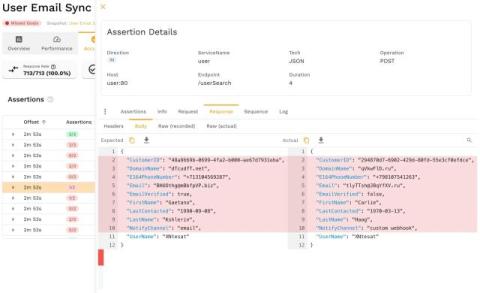
In API testing, speed, accuracy, and confidence in test results are everything. Regardless of whether you're validating functionality, testing performance under load, or ensuring compliance with your security posture and standards, the ultimate goal is the same: catching problems before they reach production. But what if your tests are lying to you? Lurking beneath even the most sophisticated test suites is a subtle, pervasive threat: data coupling. Data coupling is a silent API killer that doesn't throw immediate errors or break builds in obvious ways.

Stop Guessing with OAuth: Understanding CI/CD

OAuth 2.0 is the leading open authorization framework that enables secure delegated access to protected resources. From traditional web apps and browser-based apps to native apps and desktop applications, OAuth allows client apps to grant access on a user’s behalf without exposing login credentials, enabling powerful third-party applications, custom data flows, and powerful user experiences. However, while OAuth is secure, it’s not always fast.

Data Sovereignty Is Everyone's Problem

Data sovereignty isn’t just a niche consideration anymore – it’s a central requirement in everything from cloud computing and analytics to software development. The environment of 2025 is significantly different from that of 2015, and even more so from 2005. What was once a patchwork of guidance documents, data privacy laws, and local regulations has given way to massive EU-wide regulations, multinational frameworks, and a greater focus by users on digital identity.

Speeding up AI Coding Assistants using Deterministic Feedback

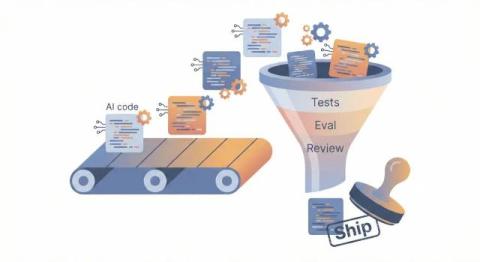
AI coding assistants are transforming the way developers approach software development by automating routine tasks and enhancing code quality. These tools leverage artificial intelligence and machine learning to provide real-time code suggestions, auto-complete functions, and even debug existing code, making the development process faster and more accurate.