Systems | Development | Analytics | API | Testing

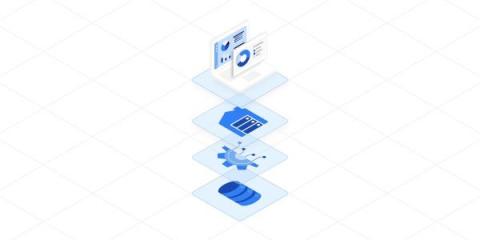
Founder's Guide to Setting Up a Data Analytics Foundation

Business metrics guide founders and decision-makers to make the right call to push their ventures towards their goals. In the initial launch of a startup, the focus tends to be on revenue and profits. However, if a startup wants to scale up, it is important to broaden what metrics and key performance indicators (KPIs) are monitored at each stage, so that they can grow the business by using data instead of just intuition.

Make the leap to Hybrid with Cloudera Data Engineering

Note: This is part 2 of the Make the Leap New Year’s Resolution series. For part 1 please go here. When we introduced Cloudera Data Engineering (CDE) in the Public Cloud in 2020 it was a culmination of many years of working alongside companies as they deployed Apache Spark based ETL workloads at scale.

Integrate.io Now Has a New NetSuite Connector!

When it comes to big data, the general rule of thumb is "the more of it, the better." With more information at your fingertips, you'll be better equipped to run analytics workflows and uncover valuable insights for data-driven decision-making. However, there's another rule of thumb that applies in situations like these: "sharing is caring." Even if you collect massive quantities of information, its benefit will be limited if other people and software in your organization don't have access to it.

A Beginner's Guide to Amazon Redshift

Data. Big data is everywhere in your business and odds are good that you have petabytes of it. From your customer's purchasing information to financing data, you need to make sure that you are properly managing your data. This means working on recording, organizing, and analyzing it. As the old expression goes, "Junk in, junk out." If you don't properly manage your data, you'll have nothing but junk. This means that you have to store your data and datasets.

Examining the Skills Most in Demand by Tax Teams: The Merger of Tech and Finance

Finance teams have played a leading role in the adoption of technology to transform previously inefficient manual or spreadsheet-based processes. While investment in tax and transfer software has tended to lag that in core finance systems, adoption is maturing and pressure from the office of the CFO to implement digital tools is beginning to grow.

To user-friendly SQL with love from BigQuery

Thirty five years ago, SQL-86, the first SQL standard, came into our world, published as an ANSI standard in 1986 and adopted by the International Standards Organization (ISO) in 1987. On this Valentine’s Day, we, in BigQuery, reaffirm our love and commitment to user-friendly SQL through a whole slew of new SQL features that we’re pleased to share with you, our beloved BigQuery users.

Top three requirements for self-service analytics according to Harvard Business Review

Being data-driven is no longer optional. With increased digital dexterity among customers and fast-changing market conditions and disruptions, organizations have entered the defining decade of data. This new era is characterized in part by the need to put live data directly into the hands of frontline decision-makers with self-service analytics.

Hevo Enables Lovebox to Gain Deeper Customer Insights

Victor Jager, Head of Business Performance at Lovebox, talks about how before Hevo, most of Lovebox's data rested in disparate sources. There was no way to perform transversal analysis and gain insights into the customer's journey. Hevo has enabled Lovebox to unify eCommerce, website, product, and support data from Shopify, Google Analytics, Amplitude, Zendesk, and Google Sheets to a BigQuery Data Warehouse.