Performance Testing: The What, Why, and How
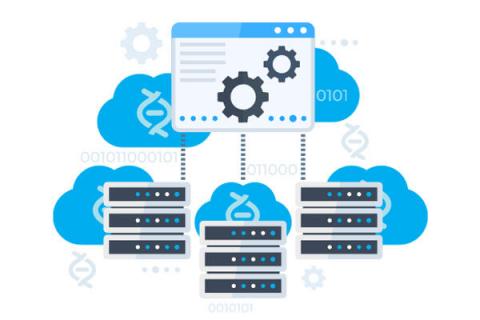
Performance testing uses workflows in parallel to test a system’s infrastructure to ensure a product works successfully for many users at the same time.


The latest News and Information on Software Testing and related technologies.
Performance testing uses workflows in parallel to test a system’s infrastructure to ensure a product works successfully for many users at the same time.
End to end testing (E2E testing) is a software testing technique that evaluates the functionality and performance of an application by testing it from start to finish, under real-world conditions. By simulating the live settings, E2E testing validates the behavior of not only the overall application but also its sub-systems from the end user's perspective.
Helix Core, the industry-standard version control system, empowers teams to accelerate innovation and collaboration at scale. Deployment of Helix Core in the cloud is simple, easy, and customizable. Perforce provides several deployment options to better meet your team’s unique needs. Read along or jump to the section that interests you the most. ➡️ easily deploy Helix Core in the Cloud.
Test orchestration is the arrangement of automated tests into a consecutive sequence for execution. It’s a method that focuses on strategically choosing specific tests (performance, functional, unit, etc.) and deciding on the order of executing tests. Software development teams that adopt test orchestration can streamline the testing process, improve transparency at each testing stage, release faster, and ultimately create a higher quality product.
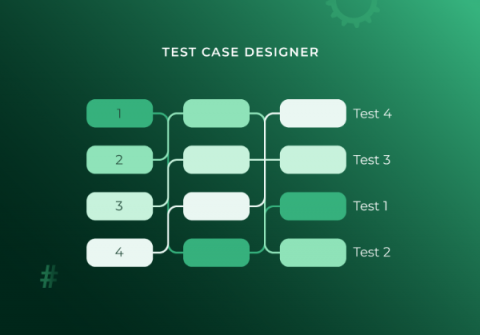
Normally, testers write scripts on their own, which can be time-consuming, difficult to ensure 100% coverage, and hard to communicate precise requirements coverage achieved to critical stakeholders and clients. Inside Xray Enterprise, the new test case design tool, Test Case Designer (TCD), takes a model-based approach to designing more powerful tests. The tool’s algorithm uses pairwise/combinatorial methods to generate optimized tests based on the parameter models.
To effectively run tests of all the important test-cases and guarantee that all the criteria are being met to the fullest extent feasible, testers must do more than just run the software through its paces; they must also manage, gather, and retain massive volumes of data. These testing datasets are used as input by test cases, from which anticipated and unexpected system behavior may be determined.
This is Part 2 of the Requirement Gathering Blog series by Rahul Parwal. We’d like to thank him for sharing his expertise with the community through this information-packed piece. In the Agile methodology, the requirement-gathering “phase” is not as rigid and formal as in the traditional Waterfall method.