Sauce Connect Shared Tunnels
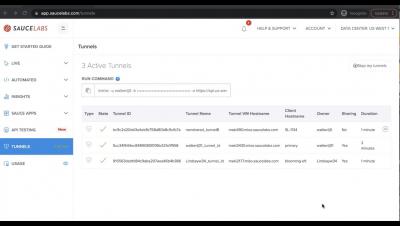
Learn how to start a shared tunnel. See how a shared tunnel is started and used in both a manual and automated test..


The latest News and Information on Software Testing and related technologies.
Load testing isn’t an engineer’s favorite task. Every setup choice made during performance testing will yield varying results. The chosen load test protocol is the difference between an application that performs well under most circumstances and one that buckles at hidden stress points. Yet failing to run adequate tests isn’t an option when dealing with a complex API architecture. Needless to say, all your load testing options must be carefully evaluated.
We have already wrote previously about how you can automate your testing routines without using the graphical interface but by using Loadero API instead. In this blog post we will show how you can integrate performance and load tests into your CI/CD workflows with the help of Github Actions. Github Actions allow you to automate and execute your development workflows directly from your repository which makes the integration very simple.
Mobile app testing can be time-consuming, error-prone, and sometimes expensive if not done the right way. But mobile app testing is a critical part of the development process, so skipping it comes at a huge cost to end UX. To compete with the millions of mobile apps on the market, your set of best practices must ensure that the user experience is incredible for every consumer every time they use your app, starting from the first try. Not sure where to begin?
In early 2016, Signagelive—a digital signage company—had an informal approach to QA. When developers had time, they performed a few manual tests ahead of each software release and hoped for the best. This allowed the company to focus on growth and building new features, but the company reached a point where the number of bugs clients found was unacceptable.
The goal of this getting started guide is to help teams get Jenkins continuous integration (CI) servers configured, and discover how to make a newly deployed CI infrastructure fully operational. Jenkins is a leading open source CI server. It is flexible, providing hundreds of plugins to support building, testing, and deployment, and is capable of automating any project. Jenkins CI infrastructure can be deployed to on-prem, in the cloud using configuration management tools, and third-party vendor.