Systems | Development | Analytics | API | Testing

The latest News and Information on Software Testing and related technologies.

AI Testing Best Practices - Why Human Governance Separates Real AI Platforms from Hype

There is a scenario playing out in QA teams everywhere right now. A team adopts an AI testing tool, runs it for the first time, and gets 300 test cases in minutes. The demo worked. The ROI math looked great. But three sprints later, 60 of those test cases are validating requirements that were updated in the last sprint. Twenty more test a user flow that was deprecated. The AI performed exactly as advertised. The governance system never existed.

Why You Should Stop Buying SaaS and Start Building It

The "Buy vs. Build" rule is dead. Generic CRMs are too slow for lean startups, so we built our own. In this video, Ken breaks down "Radar," the custom AI dashboard we use at Speedscale to automate prospecting and outreach. Stop fighting bloated SaaS and start building the exact tools you need to solve your distribution problem. Learn more: speedscale.com.

Why SaaS is Dying (and what's next) #speedscale #saas #data #datasecurity #devops #technews

Traditional SaaS is a data trap. It’s time to stop sending your most valuable asset to third parties. Enter BYOC (Bring Your Own Cloud): the future of data sovereignty, where the software comes to you. Visit: speedscale.com.

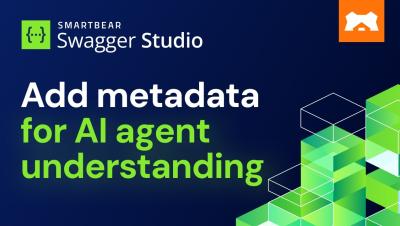
How to Add Intent and Metadata to OpenAPI in Swagger Studio for AI Agents

Modern APIs aren’t just read by developers anymore; they’re also interpreted by tools and AI agents. In this video, Solutions Architect Joe Joyce walks through how to enrich an OpenAPI definition in Swagger Studio with meaningful metadata such as descriptions, summaries, operation IDs, tags, schemas, and examples. You’ll see step-by-step how these additions help tools and automated agents better understand API intent, purpose, and semantics. This turns your OpenAPI definition into a contract that scales beyond documentation.

Tester's guide to digital transformation: Why robust object recognition matters

Digital transformation rarely happens in a clean, technical environment. Most organizations aren’t starting from a blank slate – you’re operating across a mix of legacy desktop applications, internal web systems, custom-built interfaces, and business-critical workflows that must remain stable while modernization continues around them. The central challenge is whether that automation can remain reliable as underlying technologies evolve.

HealthTech QA Services

A clinical decision support tool suggests the wrong medication dose. A telehealth platform exposes 50,000 patient records. An AI diagnostics chatbot confidently gives incorrect test results. These are not just rare cases; they are real risks when healthcare software is released without proper HealthTech QA Services and healthcare software testing. Healthcare software cannot afford mistakes. In other industries, bugs can cause financial loss or inconvenience.

Stop Chasing Ghosts, Use Observability to Find Real Performance Gremlins

Performance testing without observability is like diagnosing a sick patient using only a thermometer. You get one number. You miss everything that matters. Observability-driven performance testing combines load testing with metrics, logs and distributed tracing to identify not just when performance degrades, but exactly why.