For Snowflake CIO and CDO, Sunny Bedi, “life after dashboards” isn’t just a catchy tagline – it’s how he runs his business. At the helm of Snowflake’s 250-person IT and security organization, Bedi oversees a range of strategic initiatives including security and access control, data quality, and general system availability and performance.
Dozens of new connectors, partner integrations, security and compliance enhancements — and the Fivetran data models you love.
Organizations increasingly turn to AI to transform work processes, but this rapid adoption of models has amplified the need for explainable AI. Explaining AI helps us understand how and why models make predictions. For example, a financial institution might wish to use an AI model to automatically flag credit card transactions for fraudulent activity. While an accurate fraud model would be a first step, accuracy alone isn’t sufficient.
Co-founded by a professional tennis player stricken with cancer at age 24 and his wife, Your Super is an eCommerce company focused on helping people improve their health with nutritious superfoods. Even in its early days, the company focused on using their data to uncover customer wants and help them get the most value out of their purchases. “When I first started, the company was maybe 20 people,” explains Gabriel Freeman, Business Intelligence Manager for Your Super.
Let’s start with a hard truth: If you try to do everything, you won’t excel at anything. In a growing business, there’s no shortage of things that need attention, but you can’t do everything at once. Instead, you have to decide where to focus your resources to get the greatest impact. In a word, you must become a master of triage.
Most enterprises that have embarked on their digital business journey have quickly realized that data is the foundation of every digital business. No successful digital business has succeeded without a data strategy. So, when I joined Joe DosSantos, Chief Data Officer at Qlik, on the Data Brilliant podcast, we discussed how data has been democratized, why certain organizations have succeeded with digital transformation, and what factors are required to build the culture for success.
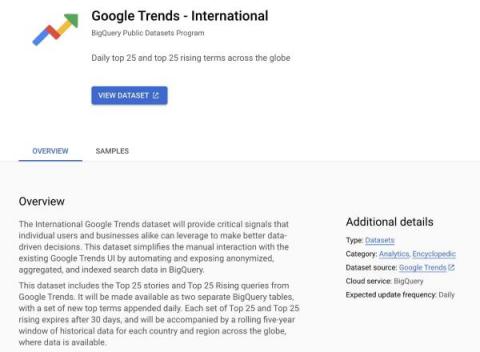
The concept that data is critical to an organization's growth is nothing new. As digital transformation takes every industry by storm, however, the types and sources of data have rapidly evolved. Relying simply on proprietary data is blinding at best. Over the last few years, innovative companies have raced to tap into new sources — often those they don’t own.