Systems | Development | Analytics | API | Testing

How Ai Code Is Transforming The Future Of Software Development

The world of software development is undergoing a huge transformation, due to the emergence of artificial intelligence (AI). AI-powered tools and methodologies are reshaping how we write, test, and deploy code, which is making our programming faster, more efficient, and more accessible. In this blog, we’ll explore the concept of code with AI, its applications, benefits, and its potential to redefine the future of technology. So, let’s dive in!

Understanding Murmur Hashing: When and Why to Use

Hashing is a cornerstone of computer science, used extensively in data structures, cryptography, and distributed systems. Among various hashing algorithms, MurmurHash stands out for its speed, efficiency, and suitability for non-cryptographic applications. In this blog, we will delve into what MurmurHash is, when to use it, and how it compares to other hashing techniques, along with practical examples.

Streamline Your Logging with JSON

JSON, which stands for JavaScript Object Notation, is a lightweight data-interchange format that offers a way to store and exchange data that is simple to read and write. It can be viewed as a format for organizing data so that different programs can understand it. It is frequently used for transmitting data in web applications between a server and a client. JSON logs are log entries that are formatted in JSON.

How can Small Businesses Employ Knowledge Management?

The method of a company to obtain, exploit and store information or knowledge employed to make the business run profitably is known as “knowledge management”. Several small or mid-sized businesses, miserably, just wait for the big companies or market players of the industry to specify which knowledge should be preserved and how it should be managed.

Introducing Third-Party Service Integration for Choreo

We are excited to introduce a new feature in Choreo that provides the ability to register and consume third-party services through connections. This feature empowers developers to seamlessly integrate external services such as Twillio, Salesforce, etc. with their Choreo applications, opening up a world of possibilities for creating more robust and versatile applications.

Understanding PostgreSQL EXPLAIN: A Guide to Query Optimization

PostgreSQL's EXPLAIN command is a powerful tool that provides insights into how a query will be executed. It helps developers and database administrators identify potential performance issues in their queries. In this blog, we will explore what EXPLAIN is, when to use it, how to interpret its output, and techniques for optimizing queries based on the insights it provides.

Unit Testing in Node.js With Jest

Unit tests are essential for increasing the test coverage of a backend application, ensuring its reliability, functionality, and robustness. Jest has become one of the most popular solutions when unit testing in Node, due to its intuitive API, zero-configuration philosophy, and flexible approach to code transpilation. In this guide, you will learn more about Jest, explore its features, and see it in action through a complete example. Become a Jest unit testing expert!

Server-sent Events and WebSockets in Rack for Ruby

In the previous part of this series, we discovered how to create persistent connections in Rack in theory, but now we'll put what we learned into practice. The web has two formalized specifications for communication over a persistent connection: server-sent events (SSEs) and WebSockets. WebSockets are widely used and highly popular, but SSEs are far less well-known. Let's explore them first.

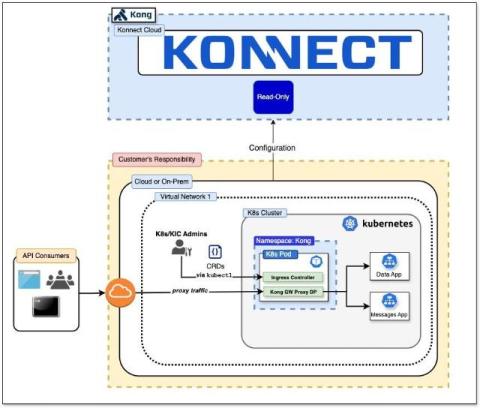
Konnect Evolved: Declarative API Management in Kubernetes with Kong Gateway Operator

Konnect, the robust API management platform, is evolving to embrace the declarative power of Kubernetes. In this demo-driven talk, we’ll delve into how Konnect now leverages Kubernetes as the single source of truth for its configuration, ushering in a new era of simplified API gateway management. See firsthand how this shift enables you to define every aspect of your API infrastructure—from gateways and upstream services to plugins and consumer management—using intuitive Kubernetes manifests.

Using Cache-Control headers in Laravel for HTTP caching with Cloudflare

We recently helped our customer Holocafé prepare its Laravel application for a TV appearance on the German edition of Dragons’ Den (Höhle der Löwen) and the corresponding peak in traffic. The primary change was to utilize Cloudflare as an HTTP reverse proxy to cache the main page of the site and a few other mostly static pages that users were most likely to click on. The expectation was that 80-90% of the curious users could be served with pages from the HTTP cache.