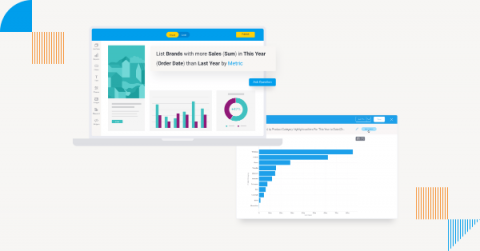
Analytics and data visualizations have the power to elevate a software product, making it a powerful tool that helps each user fulfill their mission more effectively. To stand apart from the competition, today’s software applications need to deliver a lot more than just transaction processing. They must also provide insights that help drive better decisions, alert users to matters that require their attention, and deliver up-to-the-minute information about the things that matter most.
Organizations are improving the quality of their marketing analytics at less cost, which is translating into more overall marketing efficiency – all by adopting the modern data stack.
This article compares and contrasts the three most popular unit testing frameworks in ASP.NET Core: NUnit, xUnit, and MSTest.
As an engineering leader, you probably have some test design or execution needs that are specific to your organization or team. For more granular control over your testing processes and to ensure adherence to auditing and compliance standards, you need the ability to customize test steps within your test cases. You’re not alone.
Routing is a crucial aspect of an app. Just like when you manage the application state or build the UI, you should give sufficient attention to optimizing the routing of your application. An optimized routing system helps users navigate your app and can handle the user state efficiently. go_Router is a declarative and minimal routing system built on top of Flutter’s Router API. go_router provides a convenient URL-based API to navigate between different screens.
In the past, most software applications were all about “data processing.” In the parlance of old-school management information systems, that meant an almost exclusive focus on keeping accurate transactional records alongside any master data necessary to complete that mission. Transaction processing is important, of course, but in today’s world, applications are expected to deliver a lot more than that.
A service mesh is a dedicated infrastructure layer that manages traffic, also known as communication, between services in applications composed of containerized microservices. It is a critical component in a microservices architecture, responsible for the secure, fast, and reliable communication between services. This article answers a lot of the questions you may have about service meshes: What are they and how do they work? Who is using them and why?