Most weather APIs are built around the basics: temperature, rain, wind, humidity, and a forecast icon that looks good in a dashboard. That works for a simple weather app. Solar-aware software needs more.
Load testing is essential for validating infrastructure auto-scaling policies before deployment. Skipping this step can result in resource wastage or bottlenecks. In a recent case study, simulating traffic spikes in a controlled environment enabled teams to reduce response times and lower server costs.
Before you start, paste this into Claude Code, Cursor, Codex, Gemini CLI, Kiro, or any assistant that can read a URL and run commands: The install-speedscale skill installs proxymock for your operating system and walks you through proxymock init. It stops when you need to complete browser sign-in, keeps your recordings on your machine, and connects the proxymock MCP server so your assistant can run the prompts later in this article.
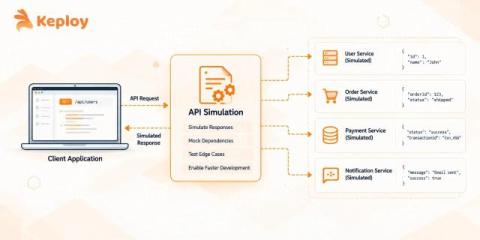
API simulation replaces real dependencies with stand-ins that respond like the actual service, keeping tests deterministic and free from rate limits, per-call fees, or unfinished upstream APIs. Simulators are built from hand-written stubs, OpenAPI specs, or recorded traffic; Keploy follows the recorded-traffic approach, capturing real HTTP, gRPC, database, and queue calls and replaying them automatically.
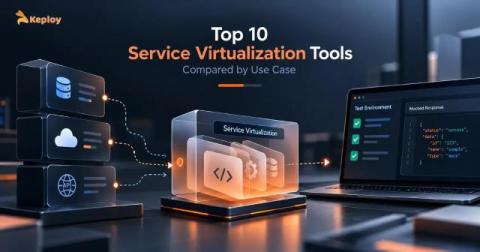
Service virtualization tools don’t all solve the same problem. One team needs to simulate a single flaky HTTP dependency in CI. Another is dealing with mainframe middleware and legacy messaging protocols that most tools don’t touch. A third is running microservices on Kubernetes and wants traffic captured automatically without writing a single stub file. The category has expanded fast.
When an enterprise moves an AI system from a local staging environment to a live production cluster, standard testing metrics often break down. A pipeline that achieves excellent accuracy on static test sets can easily fail when exposed to real-world user data, changing context windows, or minor updates in third-party model APIs. For quality assurance leaders, maintaining software reliability requires moving past manual evaluations and building automated validation pipelines.
Software testing is becoming increasingly complex. Modern engineering teams are expected to release faster, support continuous delivery, manage larger test suites, and maintain quality across web, mobile, API, and AI-driven applications. That is where test management tools come in. In 2026, test management is no longer limited to storing test cases and tracking pass/fail results.
Today we're announcing Kong Operator 2.3. Building on 2.2's expansion into supporting Event Gateway and Dev Portal, this release significantly broadens our feature set. While 2.2 introduced foundational event-driven capabilities, 2.3 brings Kong **AI Gateway** fully into the Kubernetes-native fold, enabling teams to manage LLM routing and policies through familiar GitOps workflows. This update also rounds out Gateway API coverage with `TCPRoute`, `UDPRoute`, and `GRPCRoute`.
Choosing between cloud-based and on-premise load testing solutions is a strategic decision in performance assurance. Picture cloud load testing as casting a wide net – covering broad territory and adapting to changing conditions. On-premise is more like fishing with a spear, offering precise control but with limited reach.
Remember when “going shopping” meant getting in the car? This fall, filling the tank feels like applying for a small loan. U.S. regular gasoline averaged about $4.48 a gallon for the week of September 21, 2026. A round trip to the store starts competing with free shipping. And free shipping never needs a parking spot. That doesn’t tell us how many shoppers will move online this holiday season.