Systems | Development | Analytics | API | Testing

Does your AI stack need a session layer? A maturity framework for teams building AI agents

Most teams building AI agents start with HTTP streaming. It's the right starting point. Every major agent framework defaults to it, it gets tokens on screen fast, and for a single-user prompt-response interaction it works well. The question is when it stops being enough - and how to recognise that before it turns into user experience problems, engineering waste, and technical debt that constrains what your product can do.


How to Teach Your AI Agent to Build Keboola Data Apps

You can build Data Apps inside Keboola with Kai. But what if you prefer working with Keboola via MCP, in Claude Code, Cursor, or another AI-powered editor? Want to build a JavaScript Data App that Kai doesn't support yet? That's what the Keboola AI Kit is for. It's a set of skills you install into your agent so it knows how to work with Keboola - how to query your data, how to structure a Data App, how to deploy it. Here's how to set it up.

Create tests in Reflect directly from your coding agent!

If you’ve used Claude Code, GitHub Copilot, Cursor, or any coding agent, you already know the feeling. You describe what you want in plain language, the agent figures out the steps, and you watch it work. When something goes wrong, it backs up and tries a different approach. Reflect now brings that same agentic workflow to test automation. Through the SmartBear MCP server, any coding agent that supports MCP can connect to Reflect and build tests from high-level objectives.

DreamFactory 7.4.5 Release: MCP Aggregate Data Tool, Cursor IDE Support, and Production Stability

DreamFactory 7.4.5 ships the aggregate_data MCP tool — a purpose-built tool that lets AI agents compute SUM, COUNT, AVG , MIN, and MAX directly on the database server in a single call. This release also adds Cursor IDE OAuth compatibility, a desktop OAuth success page for smoother onboarding, server-side aggregate expression support across all SQL connectors, and critical MCP daemon stability improvements including request timeout guards and global error handlers.

Policy-Driven APIs for AI: Best Practices | DreamFactory

Before rolling out policy-driven APIs, it's crucial to have a governance framework in place. This framework should clearly outline who makes decisions, how approvals work, and how exceptions are handled. Interestingly, while 71% of organizations claim to have data governance programs, only 25% actually put them into practice. Even fewer - just 28% - have enterprise-wide oversight for AI governance roles and responsibilities.

SwiftUI Button Guide: How to Create and Customize Buttons

If we want our apps to succeed, we have to get our buttons spot on. They allow our users to navigate around our apps, show their preferences and define their own personal user journeys. Not only that, they play a crucial role in the overall look and feel of our apps, and enhance our overall brand image if we get them right.

SwiftUI vs UIKit: Which Should You Use for iOS Development?

The SwiftUI vs UIKit question may seem like a sticky web of pros, cons and competing nuances. But ultimately, it boils down to one thing: Which framework is best for my specific app? The answer shouldn’t be based on hype or trends. It should be based on your own real-world parameters, like team size, UI complexity and long-term maintenance. Understanding your own development realities is crucial to making the right choice between SwiftUI and UIKit.

7 Best Service Virtualization Tools in 2026

Service virtualization tools have become indispensable for organizations seeking to streamline their testing and development processes. These tools allow teams to simulate the behavior of critical software components, enabling more rapid development with overall cost reduction and improved collaborative outcomes. As demand mounts for service virtualization solutions, identifying the best tools to support this workflow in the software development lifecycle has never been so important.

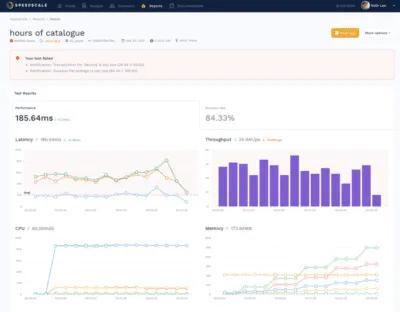
The 4 Golden Signals of Monitoring Explained

As a team, we have spent many years troubleshooting performance problems in production systems. Applications have become so complex that you need a standard methodology to understand performance. Our approach to this problem is called the Golden Signals. By measuring these signals and paying very close attention to these four key metrics, providers can simplify even the most complex systems into an understandable corpus of services and systems.

What Is a Unified Quality Platform? Why Point Solutions Fail Enterprise Teams

Every engineering function has a system of record. Developers have GitHub. Product teams have Jira. Infrastructure has Datadog. Customer success has Salesforce. But ask a Head of QA where their single source of truth lives, and the answer is usually a pause, followed by "...it depends which tool you mean.".