
Systems | Development | Analytics | API | Testing

The 10 Best Invoice Processing Software in 2025

Invoice management is an important task regardless of the size of your business, but it can quickly become overwhelming due to the sheer volume of invoices, varying formats, and the need for accurate tracking and timely payments. Manual processes with paper invoices are time-consuming, often leading to errors, delays, and difficulty in maintaining organized records. However, with the right invoice processing software, you can streamline invoice management, saving time and reducing errors.

Navigating the Future: Principles of Responsible AI | Gaurav Khurana | #testflix2024

In an era increasingly driven by artificial intelligence, ensuring ethical development and testing practices is more crucial than ever. In this thought-provoking session, Gaurav Khurana will explore the core principles of Responsible AI, including transparency, accountability, fairness, and privacy. These principles act as a foundation for building trust, mitigating algorithmic biases, and ensuring responsible data usage, ultimately fostering an AI ecosystem that prioritizes human welfare and respects privacy rights.

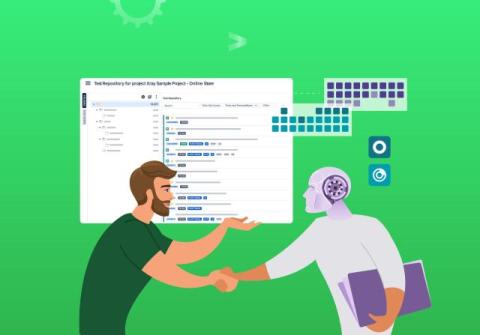
Frankenstein Tests | Gil Zilberfeld | #testflix2024 | #testingcommunity

In this session, Gil Zilberfeld highlights a critical challenge in test automation—the creation of "Frankenstein tests." These tests combine programming languages, frameworks, and domain-specific languages into a mishmash that is difficult to read, interpret, and maintain. While this approach may seem functional initially, it often leads to complex, fragile tests that become a burden as projects evolve. Gil emphasizes the importance of addressing this issue to prevent the "monster" of unmanageable tests from overwhelming your testing strategy.

Predictive Models Are Nothing Without Trust

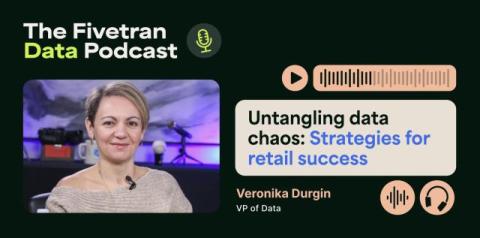
Airports are an interconnected system where one unforeseen event can tip the scale into chaos. For a smaller airport in Canada, data has grown to be its North Star in an industry full of surprises. In order for data to bring true value to operations–and ultimately customer experiences–those data insights must be grounded in trust.

Mastering Multi-Cloud with Cloudera: Strategic Data & AI Deployments Across Clouds

In today’s dynamic digital landscape, multi-cloud strategies have become vital for organizations aiming to leverage the best of both cloud and on-premises environments. As enterprises navigate complex data-driven transformations, hybrid and multi-cloud models offer unmatched flexibility and resilience. Here’s a deep dive into why and how enterprises master multi-cloud deployments to enhance their data and AI initiatives.

Building a Gen AI Wine Country Visit Assistant with Fivetran and Google Cloud

Discover how to build a powerful Retrieval Augmented Generation (RAG) application that that changes the way you explore California’s wine country. Using the latest technologies from Fivetran and Google Cloud, this tutorial will guide you through the creation of a Gen AI-powered travel assistant that integrates structured data with advanced Gen AI capabilities.

Self-Hosted Product Analytics: The Insider's Guide

Relying on third-party analytics puts your user data at risk. And as your business begins collecting more data, you also face bigger questions: Where does that data go? Who controls it? How secure is it? When it comes to hosting product analytics, companies typically choose between two common approaches: Common cloud-based analytics or self-hosted and private cloud analytics.

Publish your Flutter app to Google Play Store with Codemagic CI/CD

In this article, I will introduce the steps to release a Flutter app to the Google Play Store using the Codemagic CI/CD tool. If you have been uploading your app to Google Play manually and want to simplify that process, I hope you find this article helpful.

ESB vs. Microservices: Understanding Key Differences

Microservices are an approach to building applications that focuses on breaking down monolithic applications into independent, but loosely-connected “microservices.” ESBs and microservices are both architectural approaches for integrating applications, but they have different strengths and weaknesses. ESBs are better suited for integrating monolithic applications, while microservices are better suited for building scalable and resilient applications.