
Systems | Development | Analytics | API | Testing

Bitrise Remote Developer Environment CLI: Update iOS App for Xcode 27

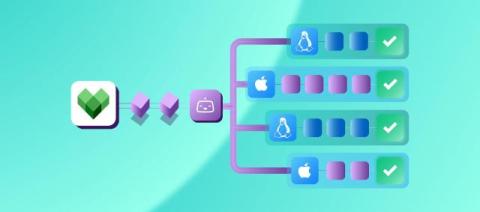
Get your iOS app working with recently released Xcode 27 beta using Claude Code running in an RDE. Spin up a trial, and try for yourself! You can power your Agentic AI Development Loop with Bitrise Remote Developer Environments (RDE). Cloud VMs that run on the same infrastructure as Bitrise CI used and trusted by thousands of mobile customers.

Predicting Build Cache time savings with Quick Connect

‍Build Cache can meaningfully shorten CI feedback loops, but only if it’s connected to workflows where it’ll actually make a difference. So how do you figure out which workflows will benefit? That’s the part that’s been easy to get wrong — until now. Quick Connect is a new feature that takes the guesswork out of estimating time savings: it looks at your last 30 days of build data and surfaces the workflows that will benefit themost from caching.

@keploy Stop Mocking APIs Manually | Use Digital Twin Sandboxes and Find Regressions in CI Quickly

Your developers — and your AI agents — need a safe way to test against production-like behavior. Keploy records real API traffic and replays it as a digital twin sandbox, so you can catch regressions before they ship. No manual mocks. No production access. No complex test environment setup. Record → generate tests and mocks → replay in CI.

AgentTAM: From Firefighting to Flight Control with Agentic AI

Ready to scale your corporate support from chaotic firefighting to structured flight control? In this comprehensive overview, we explore how Cloudera leverages its own technology stack to develop Agent TAM—a powerful suite of autonomous AI agents designed to unlock institutional knowledge, streamline customer workflows, and eliminate technical debt. Whether you want to build an automated Case Analyzer or an intelligent planning companion, this guide provides the exact architectural blueprint to transition your engineering teams from reactive firefighting to proactive, data-driven automation.

A Deep Dive into Lakehouse Catalogs

What exactly is a Catalog, and why has it become such a critical component of the modern Lakehouse architecture and AI workloads? In this episode, we break down the differences between technical catalogs (metastores) and business catalogs, explore how catalogs enable governance and interoperability, and explain why the Iceberg REST Catalog specification became the open standard for sharing Iceberg tables across platforms without vendor lock-in.

5 Essential Features to Look for in a Cloud Testing Platform (2026 Checklist)

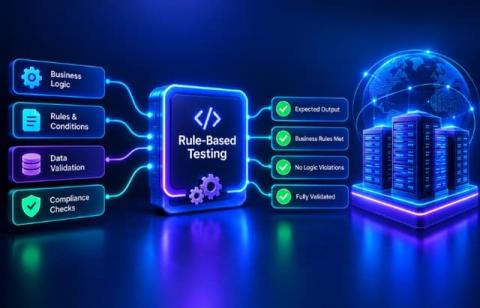
Selecting a cloud testing platform is a high-stakes decision for IT managers and QA leads. The market is crowded with vendors touting AI, speed, and integration, but the real test is whether a platform delivers the core capabilities your team genuinely needs. Begin by defining your non-negotiables – features that are essential for your workflows and compliance requirements.

Schedule recurring load tests, and get alerted only when performance breaks

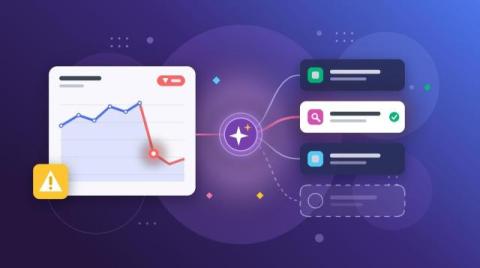
Performance rarely breaks on the day you run a load test. It breaks three deploys later, on a Tuesday, when nobody is looking. LoadFocus can now run your load tests for you on a recurring schedule, and email you only when a run actually starts failing. Set it once, and let it watch your app.

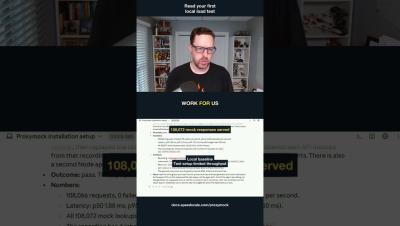
The API tests passed. The database didn't.

We shipped v2 of a small products API on a Thursday. Green CI. Green replay. The new search endpoint worked. I went home feeling competent. Friday morning I ran the same traffic against both builds with proxymock and compared the SQL. v2 had added 80 queries on the same HTTP script. A per-product audit COUNT was firing inside the list handler. A startup migration had run ALTER TABLE and CREATE TABLE audit_log. Total DB time was up 70 ms on a demo that should have been boring.

How to Simulate Realistic User Behavior in Load Testing Scenarios (2026 Guide)

Many teams still rely on basic load testing scenarios that generate uniform traffic or repeat scripted actions. These tests often pass without issue, but they rarely reflect the complexity of real user behavior. When unpredictable usage patterns hit production, hidden bottlenecks emerge – leading to outages or slowdowns that scripted tests failed to uncover. This gap between test results and real-world performance is a common source of frustration for engineering teams.

Enterprise-Grade MCP Access Control Is Here. Your Gateway Makes It Real.

*Kong makes every MCP client and server work with Enterprise-Managed Authorization, whether they speak the protocol or not.* The MCP demo impressed the room. Then someone asked how 5,000 employees would connect to 40 MCP servers, and the answer was: one OAuth consent screen at a time. Per user. Per server. No central policy, no unified audit trail, and nothing stopping a personal account from getting wired into a work tool.