
Systems | Development | Analytics | API | Testing

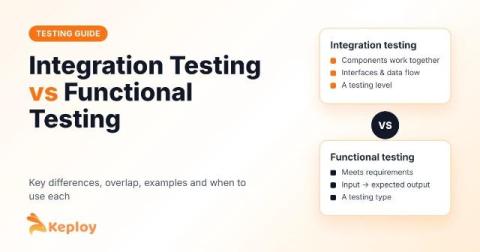
Integration Testing vs Functional Testing: Key Differences

Ask five engineers whether a test is "functional" or "integration" and you will probably get three answers. That is not because people are confused. It is because the same test can honestly be both. Here is the short version. Integration testing checks that components work together. Functional testing checks that the software does what the requirements say. One is about how the pieces connect. The other is about what the user gets.
Governed Data Pipelines: Meeting SOC 2 and Regulatory Requirements

Organizations moving healthcare, financial, or EU-resident data through an ETL pipeline face a specific constraint: the pipeline itself has to be compliant, not just the destination warehouse. Every hop a record makes from source system to transformation layer to warehouse, is a point where sensitive data can be exposed, mishandled, or logged somewhere it shouldn't be. That makes the governance model of the pipeline tool itself part of the compliance picture, not an afterthought to it.

How to Build a Marketing Dashboard in One Conversation

Describe the metrics in plain English. AI Analyst builds them, assembles the dashboard, and next month’s report starts from this month’s build. To build a marketing dashboard in one conversation, describe each metric you need to AI Analyst inside Databox in plain English, confirm the components it proposes, and ask for a dashboard assembled from the metrics you defined.

From Experiment Tracking to AI Factory: What Changes When AI Becomes a Shared Enterprise Capability

The term “AI factory” is usually introduced as a hardware story: racks of accelerators, high-speed networking, and validated reference designs. That part is real, but it is not the part most organizations struggle with. The harder shift is operational. Moving from AI as a set of individual experiments to AI as a shared, governed capability that many teams depend on changes how compute is allocated, how environments are built, who owns the platform, and how the work is governed.

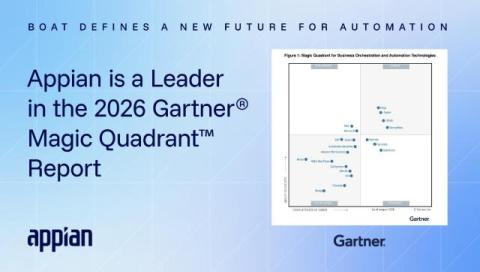
BOAT Defines a New Future for Automation: Appian is a Leader in the 2026 Gartner Magic Quadrant Report

Over the past few decades of digital transformation, organizations have accumulated separate tools for separate jobs: RPA for UI automation, BPM for workflow management, iPaaS for API integrations, and other point solutions. These investments have delivered undeniable productivity gains. But they've also created challenges: systems that don’t talk to each other, processes that break across integrations, and IT teams that spend more time maintaining the technology rather than innovating with it.

Festive Season 2026 Readiness : Why Performance and Quality Testing Matter More Than Ever

The festive rush has stopped being a single-day event. In 2026, it’s the peak moment inside a shopping season that now stretches from early October promotions through Diwali, Black Friday and Cyber Monday, straight into Christmas gifting. Traffic builds in waves for weeks before the real spike hits, and when it hits, retailers have minutes, not days, to prove their systems can handle it.

Accessibility Testing in the UK: Why Compliance and Commercial Growth Now Go Hand in Hand

For years, digital accessibility sat in a familiar box: the right thing to do, championed by a handful of committed teams, but rarely a boardroom priority. That box has quietly closed. Across the UK, accessibility has moved from a values statement to a legal and commercial reality that touches procurement decisions, product roadmaps, and marketing budgets alike.

Cloud Testing Pricing Models: Pay-As-You-Go vs Subscription

Pay-As-You-Go pricing remains popular for teams that value flexibility. If your test volumes fluctuate, this model helps you avoid long-term commitments. However, costs can rise quickly as usage increases, especially with minute- or session-based models. Performance and load testing tools often start with accessible self-serve plans but can become expensive as you scale up concurrency or virtual users.