Systems | Development | Analytics | API | Testing

Role-Based Access Control (RBAC), Explained for Data Teams

Data teams face an impossible challenge: democratize data access across the organization while maintaining security controls and meeting regulatory requirements. Without a structured approach, engineering teams spend 15-25% of their time handling access requests instead of building data products. Role-Based Access Control (RBAC) transforms this operational chaos into a manageable system but only when implemented correctly.

The Impact of AI and Machine Learning on Real Estate Business

Artificial Intelligence (AI) and Machine Learning (ML) are changing the way the real estate industry operates. From property valuation and investment analysis to customer service and marketing, these technologies are helping businesses process information faster and make more informed decisions.

The Best Tier 1 SOC Automation Tools in 2026

Tier 1 SOC is alert triage, enrichment, initial investigation, and escalation. Most of this work is repetitive and hard to scale, and legacy options for automating it (e.g., SOAR) can't keep pace with modern workloads because they're engineering-led, not analyst-led or browser-based (where the actual work happens). The tools below automate tier 1 work, and all of them use AI in some way. They range from AI SOC analysts that investigate alerts the way a human would to automation platforms with AI layered on top, plus AI built into platforms you may already run.

Comprehensive AI Security Testing for Enterprises

Enterprise QA teams are discovering that deploying machine learning models breaks their existing validation pipelines. Legacy testing environments rely on a simple truth: fixed inputs must produce predictable outputs. Because intelligent architectures operate on probabilistic distributions, deterministic testing alone can no longer guarantee reliability. When conducting a code review or architectural risk assessment, treating an active model as a standard black-box API leaves critical flaws unaddressed.

The Threats We See. The Risks We Don't

Living in South Florida, I've spent a lot of my career talking to customers about disaster recovery through the lens of hurricanes. Those conversations are easy because everyone understands the threat. We can watch a storm develop for days. Weather stations track every shift in direction. Data centers activate contingency plans. Business continuity teams prepare for impact.

How to Achieve India's DPDPA Compliance for Non-Production Data & AI Workflows

Like many other countries, India has made moves to protect consumers’ data. Comparable to the European Union’s General Data Protection Regulation (GDPR), India’s Digital Personal Data Protection Act (DPDPA) establishes new, higher standards for data privacy, timely breach notification, and consent management.

LGPD Meaning: Brazil's Data Protection Law Explained

Cyber insurance has become a standard line item in enterprise risk management, and for good reason. The financial consequences of a significant cyber event, whether a ransomware attack that halts operations for weeks or a data breach that triggers regulatory scrutiny and third-party liability, can far exceed what any operational budget was sized to absorb. Insurance exists to handle that tail. Most organizations recognize this benefit and carry a policy.

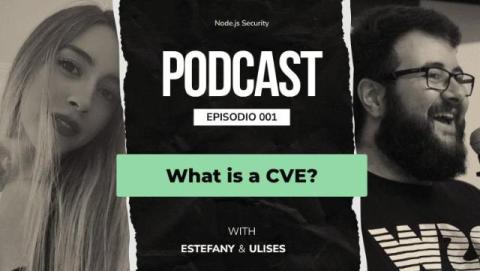
What Is a CVE, and Why Should Every Node.js Developer Care?

If you've ever updated a dependency, scanned your project for vulnerabilities, or opened a GitHub Security Advisory, you've probably seen something like CVE-2025-13465. For many developers, it's just another identifier attached to a security warning. Easy to ignore, especially when your priority is simply getting your application shipped. But that small reference represents something much bigger: it's the common language the software industry uses to identify and communicate security vulnerabilities.

Kong and ModelOp Partner to Deliver Zero-Trust Security for the Agentic Enterprise

We're thrilled to announce a strategic technology partnership between **Kong** and **ModelOp**. As enterprises rapidly transition into the agentic era, they face a critical challenge: how to deploy AI fast enough to stay competitive without taking on unacceptable regulatory or security risks. Together, **ModelOp** and **Kong** are solving the "last mile" problem of enterprise AI delivery.