
Systems | Development | Analytics | API | Testing

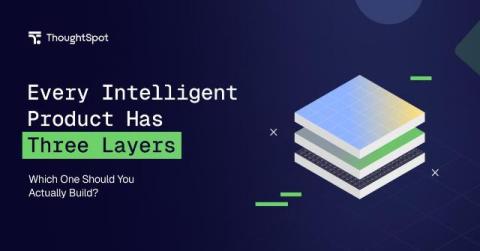
Introducing the Three-Layer Model for Intelligent Products

On a recent All-In podcast episode, David Friedberg described how his team at plant-breeding company Ohalo Genetics spent a weekend building an internal CRM using Claude Code, Cursor, and a handful of other AI coding tools. They stood it up, started using it, and it worked. Then the requests started. Can you add this feature? Can it sync with the tools we already use? What about access controls and data security?

Open Data Infrastructure in the age of AI agents

Fivetran + dbt Labs CEO George Fraser and Fivetran + dbt Labs President Tristan Handy sit down with Andreessen Horowitz general partner Martin Casado, one of the leading investors in software and AI infrastructure, to talk about Open Data Infrastructure in the AI era. Martin and his team have invested in dbt, Fivetran, Tabular, Cursor, OpenRouter, and many other companies.

Marketing Root Cause Analysis: Using AI to Diagnose Why Performance Dropped (and What It Leaves Out)

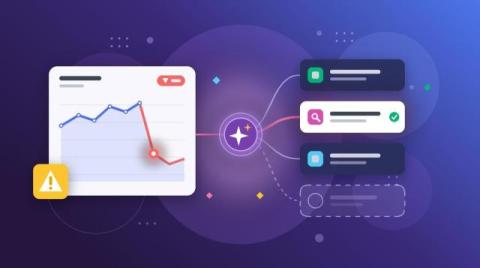
Your dashboard already told you ROAS dropped. The expensive question is why, and answering it means correlating data across platforms, isolating variables, and testing hypotheses against the numbers. Done by hand, that is an afternoon per incident. Done by AI, it takes seconds, with one catch.

Accounts Payable Metrics: 10 KPIs to Track, with Formulas and Benchmarks

Accounts payable metrics are the numbers a finance team uses to judge how well AP is working. They show what each invoice costs to process, how fast and accurately it moves to payment, and how well payments are timed. The most useful accounts payable performance metrics fall into five families: cost, productivity, speed, quality, and cash. These metrics apply whether invoices are keyed by hand or captured with accounts payable automation. No single number tells you whether AP is healthy.

Operationalizing Code Optimization

Operationalizing Code Optimization to Improve Cost, Performance, and Reliability of Your Cloud and AI Workloads While infrastructure optimizations like rightsizing and auto-suspending idle resources are standard practice, they cannot solve the cost and performance issues caused by inefficient code. Unoptimized workloads and AI functions waste compute resources, lead to missed SLAs, and significantly inflate cloud spend.

Data Chief Social 2 9x16 1

Even well-designed algorithms can fail and end up hurting the people they're meant to help. In this episode, Dr. Ben Green, Assistant Professor of Information and Public Policy at the University of Michigan, explains what keeps data from being used for good, why AI regulation can't be left to AI companies, and what organizations risk losing when they hand too much of their thinking to AI. In this clip from podcast, he shares why it is the companies that are building AI tools that need to be held responsible vs. putting agency on the tools.

What Is a Control Plane for Enterprise AI? A Look Inside Klique

A control plane for enterprise AI is the layer between the people and agents using AI and the infrastructure that runs it, meaning your models, GPUs, clusters, and cloud accounts. It decides who can use what, sends each request to the right resource, and records what that request cost. Klique is the control plane for enterprise AI. Teams get self-service access to approved tools, models, and GPUs, and IT sets the policies, quotas, and budgets behind them.

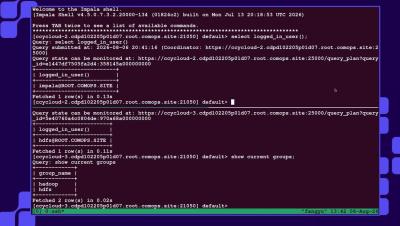
Cloudera Impala Demo: Delegated Admin for SQL-Based Access Management

See how Cloudera Impala's Delegated Admin for SQL-Based Access Management helps enterprises decentralize access management, reduce IT bottlenecks, and streamline data access administration. This demo shows how delegated administration enables authorized teams to manage access through SQL, reducing reliance on centralized IT administrators and manual UI-based processes.