Systems | Development | Analytics | API | Testing

Healthcare IAM Trends: What's Shaping Identity Security in 2026

‍Healthcare identity and access management (IAM) controls access to clinical systems and patient information. It governs authentication, authorization, account provisioning, and access removal across connected healthcare environments. Healthcare IAM trends reflect expanding access requirements across employees, vendors, applications, and AI agents. Each identity needs defined permissions, accountable ownership, and monitoring appropriate to its operational role.

What Is a Control Plane for Enterprise AI? A Look Inside Klique

A control plane for enterprise AI is the layer between the people and agents using AI and the infrastructure that runs it, meaning your models, GPUs, clusters, and cloud accounts. It decides who can use what, sends each request to the right resource, and records what that request cost. Klique is the control plane for enterprise AI. Teams get self-service access to approved tools, models, and GPUs, and IT sets the policies, quotas, and budgets behind them.

EP21: The Architecture of Product Design

In this episode of Discovering the Architecture Middle Path, Asanka is joined by Selvaratnam Uthaiyashankar (Shankar), WSO2's Chief Product Officer, to explore the architecture of product design. The conversation looks at the principles behind product decisions, the tradeoffs that shape those choices, and how architecture, developer experience, deployment models, and different user needs influence product design. They also discuss how product principles evolve as customer expectations and technologies such as AI and agentic systems continue to change.

The Top 5 Root Causes of False Failures in Test Automation And How AI Can Help Eliminate Them

False failures, a leading cause of flaky tests, occur when a test reports a defect that does not exist. The application works, yet the test suite says otherwise. The cost goes well beyond a few minutes of investigation. Perforce's 2026 State of DevOps Report found 50% of test failures stem from brittle scripts and UI changes, not actual defects, and 70% of automation effort goes toward fixing those scripts. Most teams are spending their automation budget on maintenance, not coverage.

Connect agentic testing with Jira, Linear, and Azure DevOps| SmartBear BearQ

Watch this video to see how see how SmartBear BearQ keeps bug reports and test results in sync with Jira, Linear, and Azure DevOps at AI speed and scale, with no manual copy-pasting. BearQ’s agentic QA system connects to the tools your team already relies on, so its three built-in agents can pull in context and push results right where your team lives.

New in PHP 8.6: Polling API

PHP 8.6 will include a new Polling API (RFC) that was developed as part of the PHP Foundation’s “Stream Improvement” project. Since we at Tideways place a special emphasis on PHP performance, we see this as a significant improvement for PHP users; one that has so far gone largely unnoticed by the PHP community. We hope that a wider audience will recognize its potential.

Cloudera Impala Demo: Delegated Admin for SQL-Based Access Management

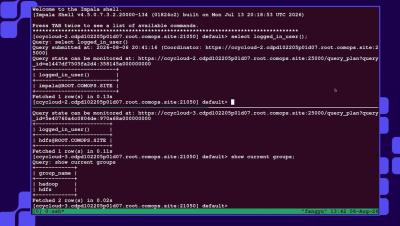
See how Cloudera Impala's Delegated Admin for SQL-Based Access Management helps enterprises decentralize access management, reduce IT bottlenecks, and streamline data access administration. This demo shows how delegated administration enables authorized teams to manage access through SQL, reducing reliance on centralized IT administrators and manual UI-based processes.

Manual Testers Are Getting Promoted

AI isn't coming for the manual tester's job. It's coming for the worst parts of it. What's left is the part you love, the part that always mattered most. And it's about to matter a lot more. There's a lot of talk right now about AI agents that can run the tests teams already have, keep them working as the application changes, and do it at a scale no team could staff. If you're a manual tester, I can guess what goes through your head when you read that. Great for the company. Where does it leave me?

What 2026 Building-Performance Requirements Reveal About Real Estate Data Infrastructure

2026 building-performance requirements increasingly depend on reliable property, meter, utility, and energy data, and that same normalized data can support compliance, reporting, analytics, and energy management. In 2026, several US jurisdictions reach building-performance deadlines, spanning recurring annual benchmarking, first-time compliance dates, and emissions-reduction requirements. The rules differ by jurisdiction, but many draw on the same property, meter, and utility records.