Systems | Development | Analytics | API | Testing

12 Best Contract Testing Tools In 2026

I’ve watched enough production incidents get traced back to a "small" API change to know this: contract testing tools exist because integration bugs are expensive, and most teams find that out the hard way. One service changes a response field, nobody notices until a downstream consumer breaks in production, and now three teams are on a call at 11 PM figuring out whose change caused it. Most "best contract testing tools" lists just dump fifteen names on you with no structure.

CI/CD Testing: Complete Guide To Continuous Testing (2026)

CI/CD testing is the practice of running automated tests throughout a Continuous Integration and Continuous Delivery (CI/CD) pipeline to validate every code change before deployment. By automating unit, integration, API, and end-to-end tests, teams can catch bugs early, improve code quality, and release software faster with confidence.

@keploy Stop Mocking APIs Manually | Use Digital Twin Sandboxes and Find Regressions in CI Quickly

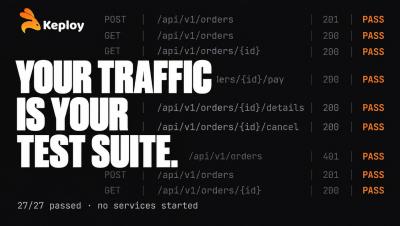
Your developers — and your AI agents — need a safe way to test against production-like behavior. Keploy records real API traffic and replays it as a digital twin sandbox, so you can catch regressions before they ship. No manual mocks. No production access. No complex test environment setup. Record → generate tests and mocks → replay in CI.

Bug Life Cycle In Software Testing: Every Stage Explained (2026)

Every bug that gets fixed in your product goes through the same journey. Someone finds it, someone confirms it, someone fixes it, and someone proves the fix actually works. That journey is the bug life cycle, and teams that manage it well ship faster than teams that treat bug tracking as an afterthought.

12 Best UAT Testing Software Tools In 2026

Passing automated tests doesn’t always mean your software is ready for users. Many issues only surface when business stakeholders interact with the product in real-world scenarios and validate it against actual requirements. That’s where UAT testing software comes in. It helps teams manage test cases, collaborate with stakeholders, track defects, and streamline the final approval process before release.

Digital Twins for Devs & AI Agents - Record, Replay & Catch Regressions | Keploy

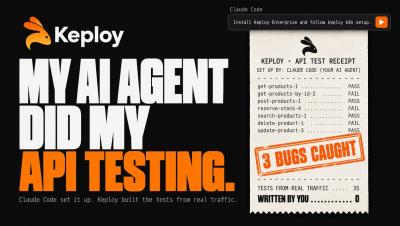
Give your developers — and your AI agents — a digital twin of your live environment. Keploy records real traffic from your live services (no production access, nothing to spin up) and replays it as a faithful twin, so you can continuously verify behavior and catch regressions before they ship. In this demo: record a live service, turn that traffic into integration tests and mocks automatically, replay everything against digital-twin sandboxes, and wire it into CI for continuous verification.

Deployment Strategies Every Developer Should Know

The first time I watched a deployment take down a production app, I was a junior engineer with no idea what a deployment strategy actually was. I assumed "deploying" just meant pushing code and refreshing the page. Deployment strategies are the structured approaches development teams use to release software updates into production, defining how, when, and how safely code moves from a repository into the hands of real users.

What Is MTTR? Definition, Formula & Benchmarks (2026)

MTTR is the metric that tells you how long your users wait after something breaks. According to Splunk and Cisco’s Hidden Costs of Downtime 2026 report, unplanned downtime now costs organisations an average of $15,000 per minute. Across the Global 2000 companies, the aggregate annual cost has surged to $600 billion, a 50% increase in just two years. Engineering teams shipping to production multiple times a day face a simple reality: incidents aren’t a matter of if.

Levels Of Software Testing: A Complete Guide With Examples (2026)

A developer writes a function. That function gets wired into a module. The module joins the rest of the application. And at some point, someone outside engineering has to decide whether the whole thing is actually good enough to ship. Four different moments, four different kinds of testing, that’s the whole idea behind levels of software testing.