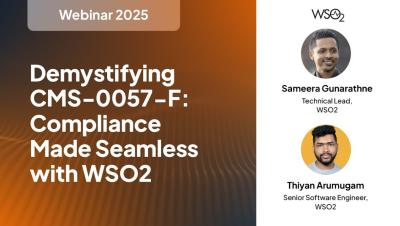
In this insightful webinar, our experts break down the complexities of CMS (Centers for Medicare & Medicaid Services) compliance, focusing on the latest regulatory updates and how organizations can ensure seamless alignment. Learn practical strategies for implementing CMS requirements, avoiding common pitfalls, and leveraging technology to stay ahead in a rapidly evolving regulatory landscape.
Living near Frankfurt in central Germany, I often drive through the bustling streets of this financial hub, where every business seems to pulse with ambition. A few months ago, I helped a friend who works at a small logistics company in Offenbach. His ERP system was struggling to keep up with growing orders, causing delays that frustrated his team and clients.
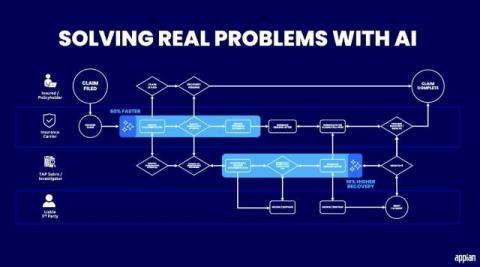
Automation has long been a key driver of efficiency. Traditional RPA and IDP technology promised to relieve carriers from rekeying, extracting data from forms, and other repetitive tasks. At Appian, we saw early that automation in isolation doesn't achieve transformative outcomes. Why? Because AI has too often been deployed at the edges of workflows: copilots, chatbots, or analytics dashboards that assist us when prompted.
In today's fast-paced mobile app development environment, lengthy testing cycles can severely impact time-to-market and competitive advantage. This session reveals proven strategies that successfully reduced regression testing time from two weeks to just one day, transforming the entire development lifecycle.
You know the feeling, you push a new feature, and your tests should catch any issues. But instead, they fail inconsistently, slow down your pipeline, or worse… pass when they shouldn’t. End-to-end testing is always a risk. That's precisely the reason why more teams are turning to end-to-end testing with Playwright. Unlike clunky legacy frameworks, the Playwright testing framework was built for speed, reliability, and cross-browser accuracy all out of the box.
Zend Server 2019 reached end of life in July 2025, and Zend Server 2021 will follow in December 2027. If you're running mission-critical PHP applications, it’s time to plan your migration to ZendPHP + ZendHQ. Zend makes it easy. Join Product Marketing Manager Simon MacKenzie as he answers frequently asked questions about migrating from Zend Server to ZendPHP and ZendHQ, including important Zend Server info and how making the change to more modular tooling will impact your Zend Server PHP processes.
APIs already account for 71% of all internet traffic, but here's what most companies are missing: AI is about to become the biggest API consumer ever. As generative AI transforms how we interact with software, agentic workflows will perform automated, API-heavy interactions on our behalf. Companies that embrace an API-first approach now will dominate tomorrow's AI economy. In this video Frank Kilcommins, Principal API Technical Evangelist at SmartBear, explains what it means for a software development organization to be API-first.
Amazon Web Services (AWS) had a well-documented failure of the S3 service in its US East region this week. The knock-on effects of the S3 outage took out many of Amazon’s other services and caused serious and long-lasting outages for many high-profile services including Quora, Trello, GitLab, and many others. Overall Amazon provides an outstanding set of services, and as anyone knows these things happen, the key is to architect your solution so that it can tolerate these kinds of failures.
Let’s say you’re renovating a house. It’s a big project, and you’ll need a lot of planning, expertise, and equipment. Now imagine you live in a world where the hammers you bought at one store don’t match up with the nails you bought at another, and certain wrenches wouldn’t work on anything but the parts they came with. What a pain, right?