Systems | Development | Analytics | API | Testing

Not All "Drill-Down" Analytics Is Created Equal

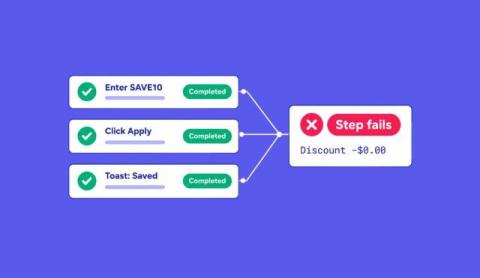
Many analytics platforms claim to support deep exploration. But in practice, “drill-down” often means navigating predefined reports—not actually querying your data. That distinction becomes clear when you look at how tools like Google Analytics 4, Piwik PRO, or Dataroid approach analysis.What “Drill-Down” Really MeansIn most analytics tools, drill-down refers to clicking deeper into dashboards—filtering segments, breaking down charts, or switching views.

React Native Over-the-Air Updates in 2026: Skip the App Store Wait with Codemagic CodePush

If you’ve shipped a React Native app to production, you already know the feeling. A bug surfaces. Users are reporting it. Your fix is written, tested, and ready to go. And then you wait. Two days. Sometimes three. Occasionally five. App Store review doesn’t care that your ratings are dropping or that your support queue is filling up. It moves at its own pace, and your users experience every hour of the delay. CodePush over-the-air (OTA) updates change that equation entirely.

Composable Banking: The New Model for Financial Institutions

For decades, financial institutions have relied on rigid core banking systems. These systems were reliable, yes, but they were never built for today’s digital-first, API-driven world. Every new feature meant long development cycles, heavy dependencies, and costly upgrades. Innovation felt slow. Sometimes painfully slow. Now, things are changing. Composable banking is emerging as a new architectural model that allows banks and fintech companies to build systems like assembling blocks.

Building Secure API Gateways for Financial Institutions: The Complete Engineering Guide (2026)

APIs now power the core of financial services, from digital banking and payments to partner integrations and AI-driven decision systems. As this dependency grows, the API gateway has evolved beyond routing and traffic management into a critical enforcement layer for security, compliance, and control. Unlike other industries, financial institutions operate under strict regulatory scrutiny while handling highly sensitive data and real-time transactions. This makes API gateways a primary point of risk.

What Is an API? A Complete Guide to Application Programming Interfaces

Last updated: May 2026 An API (Application Programming Interface) is a set of rules and definitions that lets one software system request data or services from another. APIs are the connective tissue of modern software — every time a mobile app shows live data, a website logs you in with Google, or a SaaS tool talks to your CRM, an API is doing the work in the background.

Why Optimization in a Data Lakehouse is important? #cloudera #techshort #DataLakehouse

Discover the importance of optimization when operationalizing a data lakehouse for production workloads. We break down the journey of bringing a lakehouse into production—from choosing your data file format (Parquet) and table format (Iceberg) to plugging in your catalog and compute engines. Finally, learn why balancing ingestion jobs with critical table management services makes all the difference when moving beyond single-node workloads.

Data Integration Tools Aren't the Problem. Your Source Data Is.

Data integration tools are designed to move and join data. But what they’re not designed to do is burn half their capacity cleaning up what arrives at the input. When a source exposes a schema built for application performance rather than analytics, the pipeline must compensate: Anything typed as a string because it was easier at build time gets cast into numbers or dates before a calculation can touch it. The difficult truth is this is cleanup and not value-added integration work.

Raising the Bar: Can Your Charts Do This?

Visualizations in business intelligence software are often dismissed as a “commodity”, interchangeable and easy to overlook. But what this perspective ignores is that visualizations are a gateway to better understanding data. Instead of parsing through raw data, they make key details and trends visible so that users can easily interpret the insights derived from all the data gathering, preparation, and analysis.