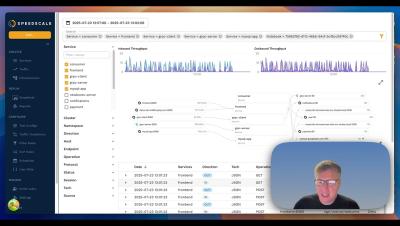
Use the free proxymock CLI to observe your locally running gRPC app without code changes. You can also create service mocks and embed them into your CI/CD pipeline using the same recording.
A report by Bloomberg Intelligence projects the AI industry will reach $1.3 trillion by 2032, with proprietary data fueling much of this growth. As businesses increasingly adopt generative AI (genAI) to enhance efficiency, data is rapidly becoming one of the most valuable assets in the digital economy. Foundational AI models require vast amounts of data for training, and many AI products are now leveraging proprietary datasets alongside these models to power innovative applications and AI agents.
Financial services companies are leveraging data and machine learning to mitigate risks like fraud and cyber threats and to provide a modern customer experience. By following these measures, they are able to comply with regulations, optimize their trading and answer their customers’ needs. In today’s competitive digital world, these changes are essential for ensuring their relevance and efficiency.
Database replication involves making sure important data is replicated across multiple locations within a company. In the advanced digital age, businesses must take all measures to safeguard their data and ensure its availability at all times. Data availability is important for proactive decision-making and empowering other tech, such as AI. This is where database replication becomes a high priority. But what is database replication exactly?
Picture this: You’ve just deployed a new feature at work, and you’re buzzing with excitement. But suddenly, you hear whispers of a critical bug in the old functionality. That gut-wrenching moment reminds us how important it is to address regression testing. In this post, we’ll delve into the legacy views of regression testing, explore its modern implications, and highlight why risk management is the real MVP in ensuring robust software development.
Automation testing has become an essential part of software development. One of the most widely used tools in this domain is Selenium. However, as with any programming framework, Selenium comes with its own set of challenges, particularly when it comes to exceptions. This guide will explore the top 10 Selenium exceptions, how to handle them effectively, and why understanding these exceptions is crucial for every automation tester.
Today, we are thrilled to unveil what our CEO Onur Alp Soner calls "not just a new version, but a new path forward" for Countly. As a leading digital analytics platform, we’re launching our most significant release to date, featuring two transformative tools—Journeys and Content Builder—crafted to redefine how you engage and personalize experiences for your customers.
If you need a continuously updated, real-time view of your system—one that evolves with your architecture instead of becoming obsolete—a new generation of truly interactive tools is the way forward.
As a Django developer, you might be tasked with a project that requires working with and manipulating spatial data. Spatial data refers to information that includes geographical or location-based attributes, representing the physical location and shape of objects on the Earth's surface or in three-dimensional space. Django provides a way to do that using PostGIS. PostGIS is an extension of PostgreSQL that adds support for spatial data.