
Systems | Development | Analytics | API | Testing

The latest News and Information on Software Testing and related technologies.

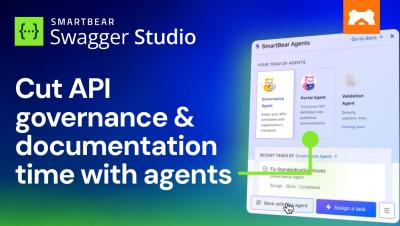
Reduce API governance and documentation time to minutes | SmartBear Swagger Studio

In this video, you'll learn how SmartBear Swagger Agents, built right into SmartBear Swagger Studio, cut the process of manual API governance reviews and documentation from weeks to minutes, generating API definitions that are specific to your APIs and compliant with your organization's governance rules from the start.

What You Need to Know About Kubernetes vs. Docker Compose

Choosing between Docker Compose and Kubernetes can feel overwhelming, especially when both play an important role in modern containerization strategies. In this video, Zend Professional Services Manager Adam Culp breaks down Kubernetes vs Docker Compose. You’ll learn the essentials of container orchestration, discover when simplicity is an advantage, and understand when it's time to scale—plus, he recommends a new tool that can help, whether you choose Kubernetes or Docker Compose.

AI in Claims Processing: What's Actually Working in 2026

‍AI claims processing applies predictive models, machine learning, computer vision, and generative AI across claims workflows. These technologies analyse documents, images, policy terms, historical records, and structured claim data. Insurers use AI for document extraction, claim triage, fraud detection, damage assessment, and adjuster assistance. Predictive models classify claims, estimate severity, and identify cases requiring specialist review.

Beyond Playwright: Building a Central Test Hub with Selenium, Cypress, and Katalon

Most QA teams do not use one automation framework. They use two or three. Selenium handles the legacy suite and cross-browser regression. Playwright covers the newer end-to-end flows. Cypress runs the frontend component tests that developers wrote. Maybe there is an Appium layer for mobile. Each framework was adopted for a good reason. Each solves a real problem. But the result is fragmented visibility. Test results live in separate CI jobs. Reporting requires pulling data from multiple sources.

Did It Actually Send?

The notifier has returned a message throughout this series, which made testing almost suspiciously easy. Assert on the return value and you are done. Real notifiers do more than build strings: they send them. Once a message goes to an email provider or SMS gateway, the function may return nothing useful. When that change lands, every existing test loses the value it asserted on. This is part 4 of a ten-part series. The code is in Java, Node.js, Go and Python.

Make Failure Boring with Mocks

Every codebase has a failure path nobody has run. Not through laziness, but because reproducing it requires a backend dependency to misbehave on cue. In the package notifier, the carrier must refuse, stall, or return nonsense at the exact moment the test runs. So the retry logic ships unverified and everyone hopes. The seam from post 2 already gives the test control. A seam is a place where you can change what code does without editing that code.

Test Behavior, Not Choreography

The spy from post 4 is a sharp tool. Once a test can record every interaction, it is tempting to assert on all of them. The result looks thorough, but it is usually a transcript rather than a useful specification. This post takes a test written that way, makes a change that no customer could possibly notice, and watches the test fail anyway. This is part 5 of a ten-part series. The code is in Java, Node.js, Go and Python.

Top 7 Network Protocols Every Tester Must Know in 2026

Performance engineers who tailor their analysis to the specific behaviors and metrics of each network protocol will uncover issues that generic approaches miss. With protocols like QUIC and HTTP/3 seeing rapid adoption, keeping testing methods current is essential for credible results.

How AI Is Rebuilding the Insurance Claims Automation Lifecycle: The 2026 Guide

AI is restructuring how insurers run the claims lifecycle end to end from first notice of loss through payment and closure. This guide breaks down where AI insurance claims automation is delivering measurable results in 2026, the reference architecture behind it, and what insurers should prioritize first. Insurance claims automation 2026 connects AI, workflow orchestration, and core systems across the claims lifecycle the specific discipline behind Zymr’s own claims processing automation practice.