
Systems | Development | Analytics | API | Testing

The latest News and Information on Software Testing and related technologies.

5 Essential Features to Look for in a Cloud Testing Platform (2026 Checklist)

Selecting a cloud testing platform is a high-stakes decision for IT managers and QA leads. The market is crowded with vendors touting AI, speed, and integration, but the real test is whether a platform delivers the core capabilities your team genuinely needs. Begin by defining your non-negotiables – features that are essential for your workflows and compliance requirements.
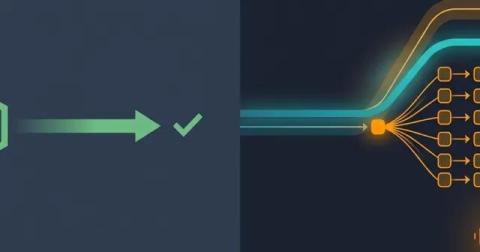
The API tests passed. The database didn't.

We shipped v2 of a small products API on a Thursday. Green CI. Green replay. The new search endpoint worked. I went home feeling competent. Friday morning I ran the same traffic against both builds with proxymock and compared the SQL. v2 had added 80 queries on the same HTTP script. A per-product audit COUNT was firing inside the list handler. A startup migration had run ALTER TABLE and CREATE TABLE audit_log. Total DB time was up 70 ms on a demo that should have been boring.

How to Simulate Realistic User Behavior in Load Testing Scenarios (2026 Guide)

Many teams still rely on basic load testing scenarios that generate uniform traffic or repeat scripted actions. These tests often pass without issue, but they rarely reflect the complexity of real user behavior. When unpredictable usage patterns hit production, hidden bottlenecks emerge – leading to outages or slowdowns that scripted tests failed to uncover. This gap between test results and real-world performance is a common source of frustration for engineering teams.

Human Testing vs. AI Testing: Striking the Perfect Balance for Flawless Digital Experiences

Twenty years of boots-on-the-ground testing experience reveals a clear pattern: the industry has moved from tracking manual test cases in Excel sheets, to managing Selenium Grid configurations, to watching algorithms generate scripts in seconds. Right now, if you are in a managerial role, your feeds are absolutely flooded with pitches promising that.

Trace without traces

A customer emailed on a Tuesday: checkout hung for ten seconds. I opened our tracing tool, punched in the time window, and got nothing. The trace was sampled out. We keep 1% of traces, like most shops with real traffic do. The one request that actually mattered was in the 99% we threw away. I spent twenty minutes admiring our observability stack before admitting it couldn’t answer a first-grader’s question: what happened to this person? Here’s what I know now.

Turn cURL, HAR, Postman or OpenAPI into a k6 or JMeter Load Test

Writing a load test script from scratch is the boring part. You already have the request you want to hammer: it is sitting in your browser’s network tab, in a Postman collection, or described in an OpenAPI spec. So why retype it as a k6 script or build a JMeter test plan by hand? Now you do not have to. LoadFocus converts a cURL command, a HAR file, a Postman collection or an OpenAPI spec into a runnable k6 script or JMeter.jmx test plan.

AI-Assisted Code Remediation: How to Connect Any MCP Host to Perforce Static Analysis

Static analysis has always excelled at finding defects, vulnerabilities, and compliance violations. Before AI-assisted code remediation, however, developers still had to research the root cause, design a fix, and manually verify that the correction satisfies the relevant requirements. The new, built-in AI-assisted code remediation feature speeds up this process.

Smoke Testing vs Sanity Testing: What's the Difference?

Smoke testing checks whether a new build is stable enough to test. Sanity testing checks whether a specific fix or change works as expected. Both are quick validation techniques, but they happen at different stages for different reasons. The easiest way to tell them apart: if you just deployed a new build and want to know if core features are still standing, that’s a smoke test.

SmartBear Swagger: Meeting You Where You Work

Some approaches to API governance interrupt developers mid-flow, forcing them to context-switch into a separate tool and manually verify their API definition before they can ship. That approach has never really worked. Not because developers don’t care about quality, they do, but because the best time to fix an API is the moment you’re already thinking about it. That’s what has always guided how Swagger grows. Not “come to us.” But “we’ll be there.”