Systems | Development | Analytics | API | Testing

Key takeaways from our research: The rise of Large Language Models - transforming AI and beyond

Large language models (LLMs) have redefined artificial intelligence (AI), pushing the boundaries of natural language processing (NLP) and enabling machines to understand, generate, and manipulate human-like text. From chatbots and content creation to legal and medical applications, LLMs are transforming industries at an unprecedented pace. But what makes these models so powerful? How do they work? And what challenges do they pose?

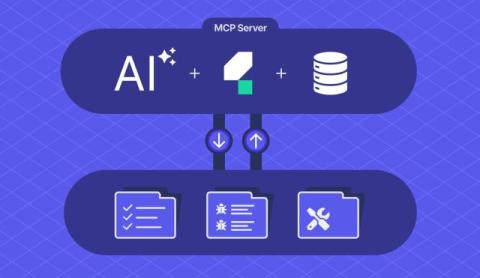
Introducing Kong's New MCP Server to Access Your API System of Record

MCP is a new way to integrate LLMs and AI agents with third-party data sources and APIs. It significantly improves how we build tool integrations by eliminating duplicated code and providing a centralized interface for multiple agents to access shared tools. Today, we’re excited to announce the release of Kong’s MCP Server for the Kong Konnect platform. This empowers customers to integrate AI agents and query LLMs to discover APIs, services, and traffic analytics in real time.

Exploring The Influence Of Openai'S Gpt-03 Mini On Technology

In the rapidly evolving landscape of artificial intelligence, OpenAI’s GPT-O3 Mini has emerged as a groundbreaking solution that combines impressive capabilities with unprecedented accessibility. This compact yet powerful AI model is reshaping how businesses and individuals interact with artificial intelligence technology. Let’s explore what makes the GPT-O3 Mini stand out and why it’s becoming an essential tool across various industries.

When Pixel-Perfect Isn't Perfect: The AI Revolution in Mobile App Testing

I’ve always been fascinated by how mobile test automation has evolved. From the early days of scripting interactions in Appium, Espresso, XCUITest, or any other tool, automation has come a long way in validating mobile app functionality. But there’s still one tricky area—visual validation. Functional automation does a great job of checking whether elements exist, buttons are clickable, and text fields accept input.

How to Test Generative AI Applications like ChatGPT?

According to McKinsey, AI-driven automation could add $4.4 trillion annually to the global economy—but only if these systems perform as intended. So how do we verify their capabilities? Testing goes beyond just bug-fixing. It’s about tests of creativity for the AI, a check for facts, and correct responses. Can it handle complex requests? Does that cut down because of harmful or misleading outputs? It's like teaching a super-smart (but sometimes clueless) assistant.

The Smart Approach to Enterprise AI Strategy: How to Get Value from AI

Artificial intelligence is now ever-present in many businesses. But where’s the ROI? Many deployments stall in pilot mode, failing to drive transformation. Over the past two years, businesses have rushed to deploy generative AI to try to boost operational efficiency, improve customer experiences, and achieve critical organizational objectives. But without a structured enterprise AI strategy, these efforts have failed to drive tangible business outcomes. The problem?

How do you build an AI Image Generator app like Midjourney and scale it up?

Ever scrolled through jaw-dropping AI-generated art and thought, how is this even possible? What if you could build something just as powerful or even better? Well, AI-driven creativity is no longer a futuristic dream because it’s happening right now, with platforms like MidJourney leading the way. These tools take a simple text prompt and transform it into a stunning, high-quality image within seconds. But have you ever wondered what goes on behind the scenes? Take a look at the image below-