Systems | Development | Analytics | API | Testing

Inference Is the New Bottleneck: How to Plan GPU Capacity for Production AI

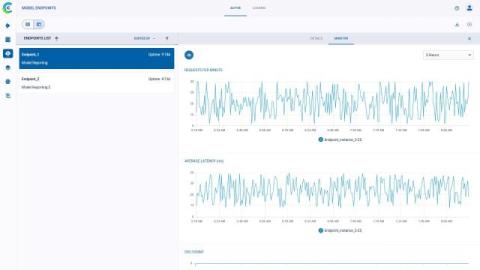
Most enterprises sized their AI infrastructure with a playbook written for training. However, training is no longer the typical workload. Inference now eats up roughly two-thirds of all AI compute, and it is changing shape fast enough that the rules of thumb from 18 months ago just do not hold. Our view at ClearML is pretty simple: when the workload shifts this much, the platform underneath it has to shift with it.

How to curate observability data for AI agents

Most debugging agents fail not because the model is wrong, but because the data going in is not ready for machine consumption. Here's what data curation actually looks like in practice. When we started building Multiplayer's debugging agent, we made the same mistake almost everyone makes. We gave our coding agent access to observability data and expected it to figure out what was relevant. It didn't.

From Scripts to Systems: Why Enterprises Are Transitioning to Autonomous Testing

Every enterprise engineering leader knows the frustration of a stalled delivery pipeline. You push a minor user interface optimization or rename a single CSS utility class, and suddenly, a stable deployment build turns red. Hundreds of automated test scripts break instantly, not because the application logic failed, but because a static element locator changed. This is the reality of modern software delivery.

Get Started With LLM Proxy in WSO2 API Platform AI Gateway

Run your first LLM proxy on WSO2 Platform AI Gateway in minutes — no cloud setup required, just Docker. This quickstart walks you through spinning up the WSO2 Platform AI Gateway as a standalone component on your own infrastructure. You'll add an OpenAI provider configuration (including API key auth and access control rules), deploy an LLM proxy that routes through it, and verify live responses end to end. What you'll set up.

Stop vs disconnect - why canceling AI streaming is harder than it looks

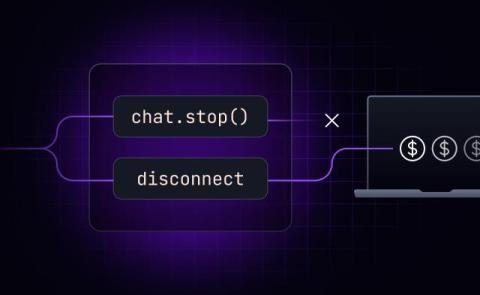
You add a stop button to your AI chat app: a customer support agent, a coding assistant, a research tool the user can steer mid-task. A user clicks it mid-response. The frontend stops rendering. Then you check your backend logs and realize the underlying generation is still running, and you’re still paying for every token. This is not a bug.

How Enterprise Teams Are Keeping Up With AI-Generated Code at Scale | Perforce 2026

When AI Starts Shipping Code: Managing the Collision Between Human and AI-Generated Code AI agents don't wait for reviews. They generate code overnight, work across the same codebase in parallel, and produce more changes than any human team can realistically process — creating a new kind of bottleneck we call the Merge Wall. In this session, Perforce engineering leaders break down what happens when human and AI-generated code collide at scale — and how leading teams are building the visibility, governance, and coordination layers required to keep up.

Moving from Probabilistic Reasoning to Deterministic Execution

Generative AI systems do not fail because models are weak. They fail because architectures are incomplete. Once organizations accept that prompts cannot guarantee reliability, a new challenge emerges: how to design systems that systematically convert successful AI behavior into repeatable, governable, and auditable workflows.