Systems | Development | Analytics | API | Testing

Al boosts developer speed, so why does it slow testers down?

AI slows testers down when it’s added without a tester-first experience. Testers naturally question coverage and intent, so Katalon designs AI around real testing workflows to boost productivity instead of creating friction. — Alex Martins, VP of Strategy at Katalon Follow Katalon for more insights in our series!

Reflect vision-based AI demo | Create one test for multiple platforms

Create a single mobile test that runs reliably on both iOS and Android - without building separate tests per platform or relying on brittle, platform-specific locators. In this high-level demo, we use SmartBear Reflect’s vision-based AI to record a typical workflow in a sample coffee app, where each step is backed by visual context and intent. Then we run the same test across a mix of Apple and Android devices, including an iPhone, to show how Reflect adapts to the environment at runtime and helps reduce flakiness and false positives.

AI Agents & Enterprise AI Governance: The WPP Blueprint for Brand Brains | The Data Chief

AI agents are transforming enterprise AI, governance frameworks, and business decision-making. In this episode, we explore agentic AI systems, decision intelligence, and brand brains — AI systems designed to produce brand-specific, production-grade content that differentiates businesses. Join @wpp's Daniel Hulme & podcast host Cindi Howson for this insightful discussion. If you're a Chief Data Officer, Chief AI Officer, or enterprise leader, this conversation explains how to deploy AI agents safely, govern them effectively, and automate complex decisions while augmenting human creativity.

How AI Augments Human Creativity at Scale: The WPP Blueprint

Learn how AI agents are reshaping enterprise decision-making, AI governance, and brand creativity. Daniel Hulme, Chief AI Officer at WPP & CEO of Satalia/Conscium, explains how AI agents, decision intelligence, and his concept of “brand brains” (AI systems designed to create brand-specific, production-grade content) are changing how organizations operate. He shares why companies don’t have data problems but decision-making problems, and how AI can augment human creativity at scale.

Maintaining compliance when adopting AI in regulated industries

Key Takeaway: Organizations in regulated industries can adopt AI without compromising compliance. Automated testing enables continuous validation of AI-enabled systems while maintaining the predictability, documentation, and audit-readiness that regulators require. In compliance-first industries, such as banking, healthcare, or telecommunications, AI adoption is rarely a simple technology decision. You are often caught between two competing pressures.

Enterprise AI Infrastructure Security Series - 1) Intro

Welcome to Part One in this series covering AI Enterprise Security with ClearML. How do you secure an AI platform, ensure compliance, and still give your teams the access they need to move fast? ClearML builds security, compliance, and cost control into every layer of the platform — the guardrails are invisible to your AI/ML teams, but not absent. In this video, I introduce the six layers of the ClearML Enterprise security stack: Identity & Access, Configuration Governance, Automation Security, Compute & Data Access Governance, Model Serving, and Audit & Compliance.

EP 19: Demystifying Agents

In this episode, *Dr. Sanjiva Weerawarana* and *Asanka Abeysinghe* demystify what “agents” really are and why architects should care. They walk through core concepts and terminology—agents, agent loops, prompts, context, memory, RAG, tools, MCP, and skills—and discuss how agents observe, act, and evaluate. The conversation compares agents to traditional systems, explores where agents fit in modern architectures (including solo agents, agent-to-agent patterns, and multi-agent setups), and looks at orchestration challenges.

Analytics for the AI Era, Reimagined with Data Products

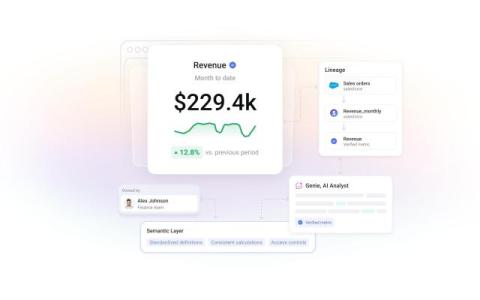
I spend a lot of time with customers and partners, and the pattern is consistent. Everyone wants the benefits of AI, faster decisions, more automation, better productivity. But the thing that slows them down is not the model. It’s the data underneath it. Not just any data, but trusted data to drive trustworthy business outcomes. As soon as you move from AI that explains to AI that influences workflows, ambiguity stops being an inconvenience. It becomes a liability.