Systems | Development | Analytics | API | Testing

Databox Analytics MCP for Teams: A Practical Guide

Every team in your company has the same problem: they need answers from data, but getting them is never fast. Marketing wants to know which campaigns are working. Sales wants to know which deals are stalling. Leadership wants to know if the business is on track. Each team asks different questions, but they all end up in the same place—waiting for someone else to pull the numbers. What if your teams could just ask questions and get answers instantly? That’s what Databox MCP enables.

Introducing the latest Agentic Test Automation: Faster end-to-end testing for the AI era

Agentic Test Automation for Tosca revolutionizes software testing. Using only natural language prompts, it automatically generates complete, executable test cases — allowing QA teams to keep pace with modern AI-driven development. This latest update expands support for new enterprise technologies and uses Tosca’s automation engine to become even more powerful. Enterprise customers can now create complex, end-to-end tests that are built and supported by Tosca’s proven technology.

How to Implement AI Test Automation Frameworks

AI test automation frameworks are transforming how teams build, execute, and maintain test suites by embedding intelligence directly into the testing workflow. Start small with a pilot framework implementation, prove ROI on a single project, then scale AI testing capabilities across your organization. Building an AI test automation framework requires more than bolting AI features onto existing test suites.

WebSockets vs HTTP for AI applications: which to choose in 2026

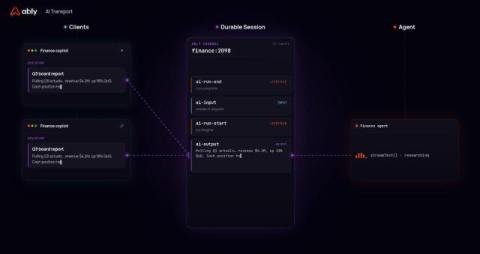
When building AI experiences, choosing between WebSockets and HTTP isn't always straightforward. Which protocol is better for streaming LLM responses? How do you maintain continuity when users switch devices mid-conversation? Should you use both? The answer depends on the type of AI experience you're building. Modern AI applications often require both protocols, each serving different purposes. The key question is: how do you decide which communication pattern fits each scenario in your AI stack?

AI Data Gateways & Data Governance: Scaling Trustworthy LLM Agents

As AI agents move from prototype to production, organizations face a growing paradox: how to give these agents enough access to unlock business value—without compromising privacy, compliance, or control. This isn’t just an integration problem. As soon as you map API layers or ask how a generative agent might retrieve sensitive customer records, the challenge becomes one of governance, scale, and trust.

The Five Pillars of AI Compliance Excellence

The AI revolution in finance is no longer a question of “if” but “how fast” and “how responsibly.” While our previous posts explored AI auditability frameworks, agentic workflows that transform finance operations, and building AI native Finance teams, today’s CFOs face an equally critical challenge: successfully navigating the complex and rapidly evolving landscape of AI compliance.

Siri 2.0 Delay: Testing Gaps That Just Cost Apple 6 Months

The news dropped this week, and it sent shockwaves through the tech industry. Apple has officially pushed back the release of its highly anticipated Sir i 2.0. Reports from Bloomberg indicate that the update, originally slated for iOS 26.4, ran into severe hurdles during internal review. The culprit wasn't a lack of innovation or features. It was a failure in quality assurance.

Build agentic AI in minutes on Snowflake

Agentic AI doesn’t have to mean months of architecture work, custom orchestration layers, or external platforms. In this hands-on workshop, you’ll build Snowflake Intelligence agents using native Snowflake capabilities to reason over structured data, retrieve context from unstructured sources, and execute multi-step analysis directly inside Snowflake within minutes.

How AI Coding Is Breaking Synthetic Data Generation

Traditional synthetic data generation approaches, still called “Test Data Management” (TDM) by legacy vendor, were designed for a world where applications were monolithic, databases were the center of gravity and change happened slowly. The world looks a lot different now. Modern systems are distributed, often times event-driven, and increasingly powered by streaming data and AI agents. In this environment, batch-oriented synthetic data generation fails to capture how systems actually behave.