Systems | Development | Analytics | API | Testing

Build resilient end-to-end tests with AI agents in SmartBear Reflect | Demo Den

See how SmartBear Reflect uses agentic AI to build end-to-end tests in minutes and keep them resilient as your application changes. In under 20 minutes, Reflect co-creator, and SmartBear Director of Product Management, Todd McNeil walks through live test creation across web and mobile, with zero fluff.

Digital Twins for Devs & AI Agents - Record, Replay & Catch Regressions | Keploy

Give your developers — and your AI agents — a digital twin of your live environment. Keploy records real traffic from your live services (no production access, nothing to spin up) and replays it as a faithful twin, so you can continuously verify behavior and catch regressions before they ship. In this demo: record a live service, turn that traffic into integration tests and mocks automatically, replay everything against digital-twin sandboxes, and wire it into CI for continuous verification.

Mobile testing, reimagined: How Reflect's Mobile Testing Changes QA

Mobile application users expect flawless experiences on every device, every OS version, and every screen size, and they have little patience for anything less. Yet for QA teams, achieving that level of coverage traditionally means wrestling with brittle automation scripts, complex Appium setups, and endless device fragmentation. Even after all this manual effort, your mobile app quality could contain unseen gaps.

Get Started With LLM Proxy in WSO2 API Platform AI Gateway

Run your first LLM proxy on WSO2 Platform AI Gateway in minutes — no cloud setup required, just Docker. This quickstart walks you through spinning up the WSO2 Platform AI Gateway as a standalone component on your own infrastructure. You'll add an OpenAI provider configuration (including API key auth and access control rules), deploy an LLM proxy that routes through it, and verify live responses end to end. What you'll set up.

Moving from Probabilistic Reasoning to Deterministic Execution

Generative AI systems do not fail because models are weak. They fail because architectures are incomplete. Once organizations accept that prompts cannot guarantee reliability, a new challenge emerges: how to design systems that systematically convert successful AI behavior into repeatable, governable, and auditable workflows.

TestComplete vs. Reflect: Which SmartBear test automation platform fits your team?

Not every test automation problem looks the same. A team maintaining complex desktop applications in a controlled financial services environment has different automation needs than a team shipping web and mobile updates every two weeks. The application, the environment, and the people creating tests all shape what “good automation” has to do.

Why We Need to Stop Prompt Hacking

Generative AI has completely changed the landscape of enterprise automation, knowledge work and operational efficiency. In 2026, the question is no longer whether these models can perform complex tasks, but whether they can do so reliably enough for mission-critical systems. Despite the availability of sophisticated models and expansive context windows, technology leaders continue to face frustration. Organizations struggle to produce consistent and repeatable results.
Sponsored Post

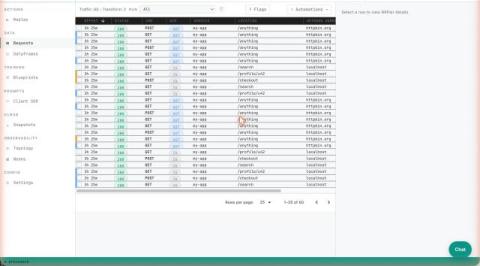
The Kubeshark Workflow That Doesn't Stop at the Dashboard

The Observability Gap shows up the moment you try to reproduce a production bug locally. Your traces tell you a request was slow. Your logs tell you which line printed. Neither tells you what was actually on the wire: the headers, the JSON body, the surprise field your client started sending last Tuesday. Until now, closing that gap meant SSHing to a node, attaching a debugger, or shipping a sidecar through change review.

From Kong Konnect to Insomnia: A Developer Workflow for Testing Gateway APIs

As API ecosystems grow, developers and platform teams often work in separate environments. Platform teams manage APIs, gateways, and governance centrally, while developers recreate those configurations locally for testing and debugging. Over time, this can lead to configuration drift, inconsistent workflows, and security gaps. The release introduces our first native Kong Konnect integration, allowing developers to discover, import, and test Gateway configurations directly from Konnect.