Systems | Development | Analytics | API | Testing

QMetry vs. OpenText ALM: Why QMetry is the better choice for regulated QA

Regulated QA teams carry a pressure most testing platforms weren’t built to solve for at the same time. Every release still needs traceability from requirement to test case to defect that holds up under audit. Approvals and evidence still need to be airtight. At the same time, agile releases, DevOps pipelines, and AI-assisted development keep moving, whether or not the testing platform underneath has kept pace.

I built an API traffic classifier for business workflows

An engineering leader asked me a question a few weeks ago: could we read their business workflows out of API traffic instead of asking people to document them? I said it should be possible. Then I tried it. A few engineers know how the system really works. They know which calls make up a work order and which checks happen after a write. That stuff rarely makes it into the test plan. Usually it’s in somebody’s head. Sometimes it’s in several heads, with slightly different answers.

Agentic QA demo: Stop fixing broken test scripts

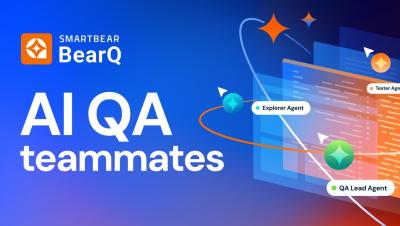
See agentic testing in action with SmartBear BearQ. BearQ uses autonomous agents to explore your application, uncover defects, create regression tests, and adapt testing as your product changes – with human oversight built into the process. Broken, flaky test scripts eat up hours every sprint – and still leave gaps in coverage. SmartBear BearQ replaces constant script maintenance with agentic QA, so testing can move beyond predefined paths without giving up human oversight.

BigQuery MCP Server: Connect Google BigQuery to AI Agents Safely

A BigQuery MCP server lets AI agents like Claude query your Google BigQuery data through a standard protocol instead of ad-hoc integrations. Because BigQuery bills by bytes scanned, an unconstrained agent is not just a security risk but a budget risk: one careless full-table scan on a wide table costs real money. This guide covers what a BigQuery MCP server does, the three ways to set one up, and the cost and security controls that matter before you let an agent anywhere near your analytics data.

Utility API & AI Security: Exposing Data Without Exposing Control

Every utility is being pulled in two directions. Operations, engineering, and customer-facing teams all want data in modern applications: outage maps, field-service apps, asset-health dashboards, regulator reporting, and increasingly AI assistants that can answer questions about generation, load, or maintenance history. At the same time, the security team's job is to make sure none of that convenience becomes a path into systems that open spillway gates, trip breakers, or control pressure.

Keep API tests in sync with OpenAPI using Claude Code | SmartBear ReadyAPI

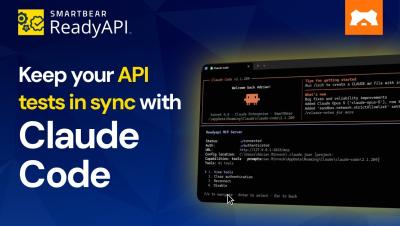
Want your API tests to stay accurate every time your OpenAPI spec changes? See how the SmartBear ReadyAPI MCP Server connects directly to Claude Code, so your API tests stay in sync with your OpenAPI spec without manual rework so you stay apace of change. In this walkthrough, Adrian Minnock, SmartBear Solutions Engineering Team Lead, configures the ReadyAPI MCP Server and connects it to Claude Code from the terminal. The demo also shows how ReadyAPI detects and repairs tests automatically after a spec change, then runs the new suite with ReadyAPI's own execution engine.

WSO2 Founder and CEO Dr. Sanjiva Weerawarana to Step Down as CEO

WSO2 recently announced that its Founder and Chief Executive Officer, Dr. Sanjiva Weerawarana, will step down from his role as CEO with effect from June 2026. The Board of Directors has initiated a search for a permanent CEO and has appointed WSO2's Chief Revenue Officer Devaka Randeniya as Acting Chief Executive Officer to lead the company during the transition period.

WSO2 Names Harry Ault as CEO to Lead the Company's Next Phase of Growth

WSO2 announces the appointment of Harry Ault as Chief Executive Officer. He will assume day-to-day leadership of WSO2 immediately, working closely with the executive team to advance the company's strategy and drive continued momentum across its global customer base.

Reliability Engineering in the AI Era

Engineering leaders have been claiming to “shift quality left” for years but production remains stubbornly stuck out of reach of software engineers. The realm of production remains mysterious with tools no one has access to and UIs that wouldn’t make sense to engineers anyway. I’ve noticed a small but growing trend of large enterprises hiring Reliability Engineers instead of Site Reliability Engineers. Dropping one word looks cosmetic but I think it points to a much bigger change.